

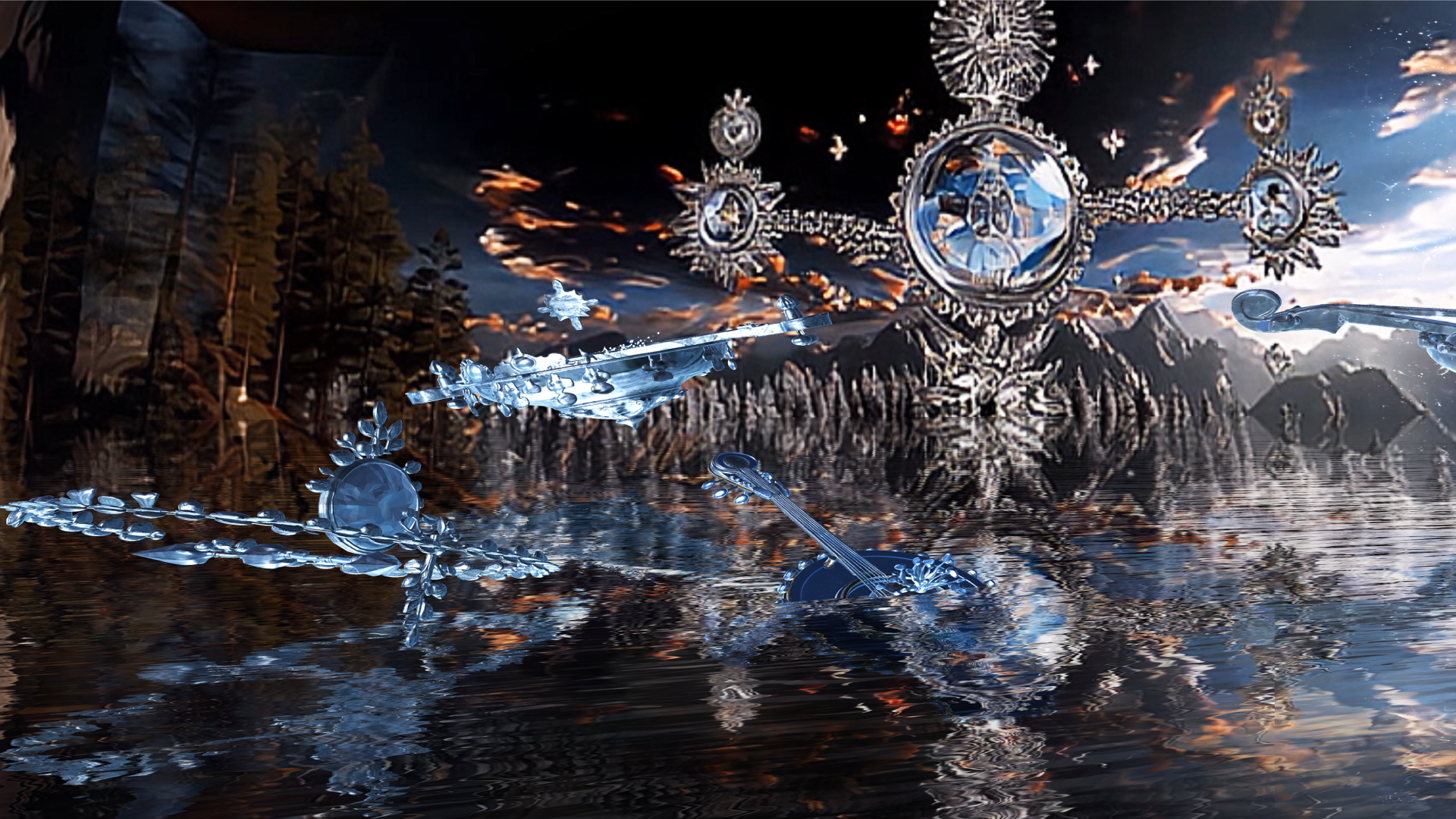
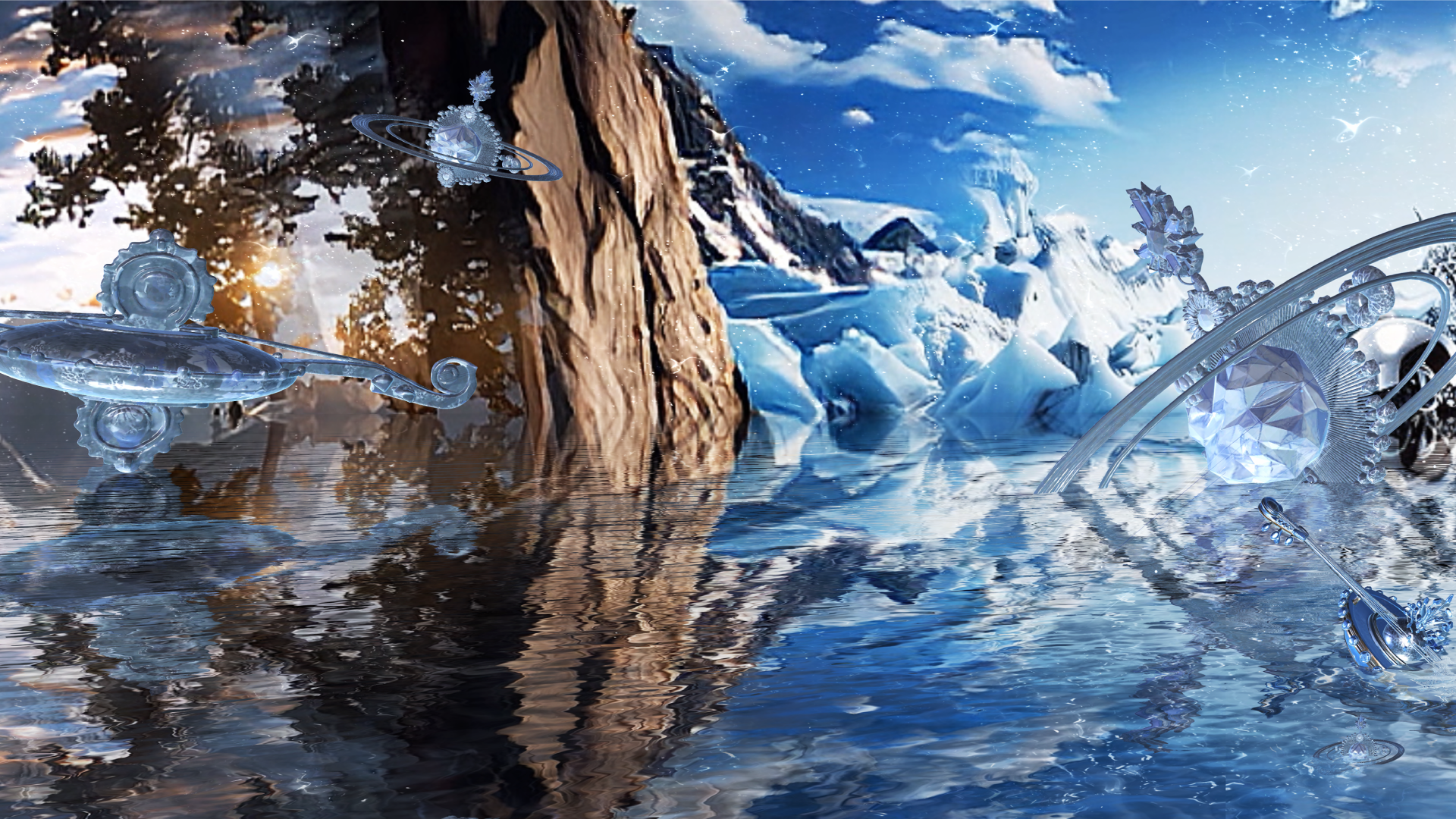
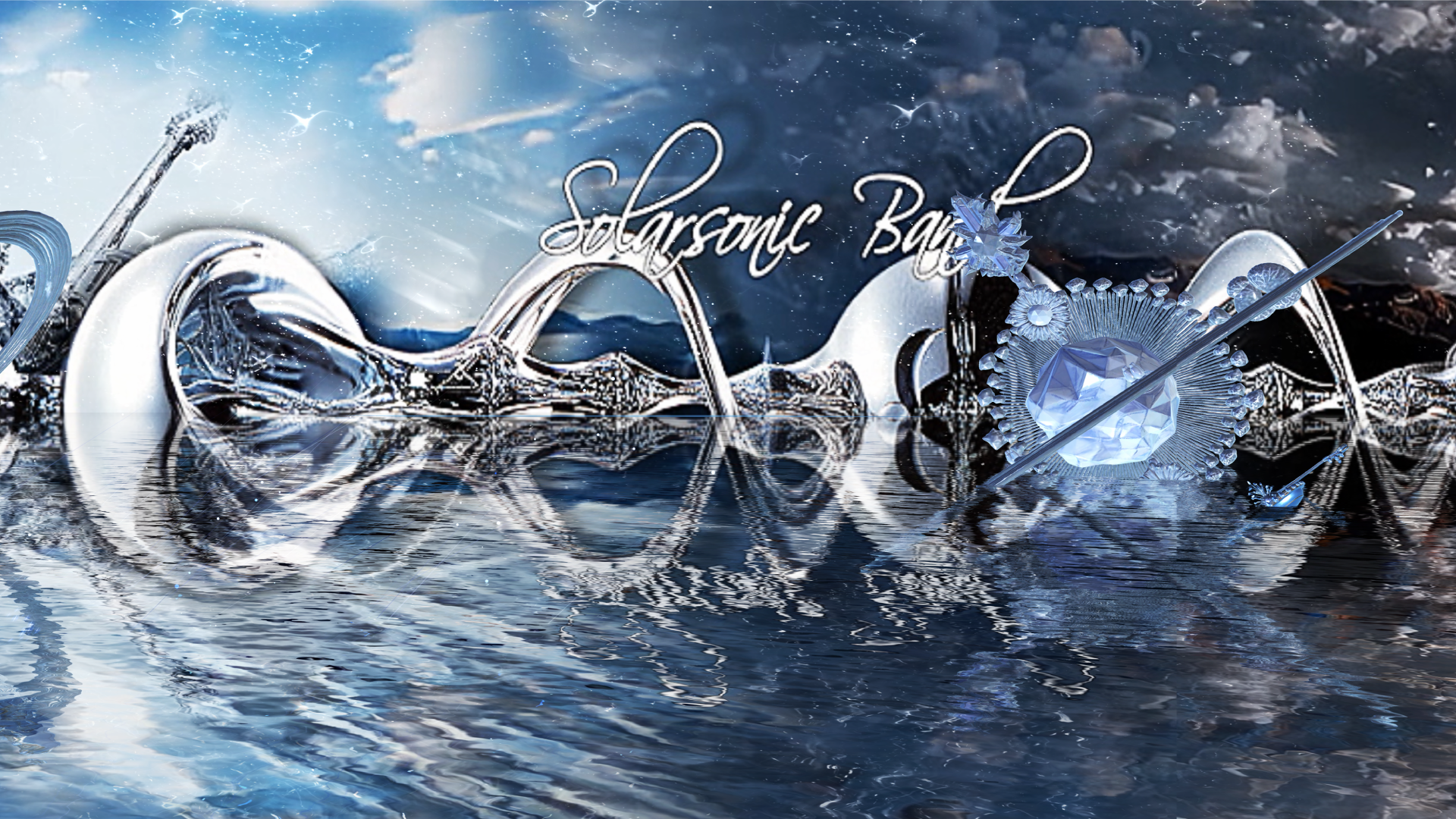
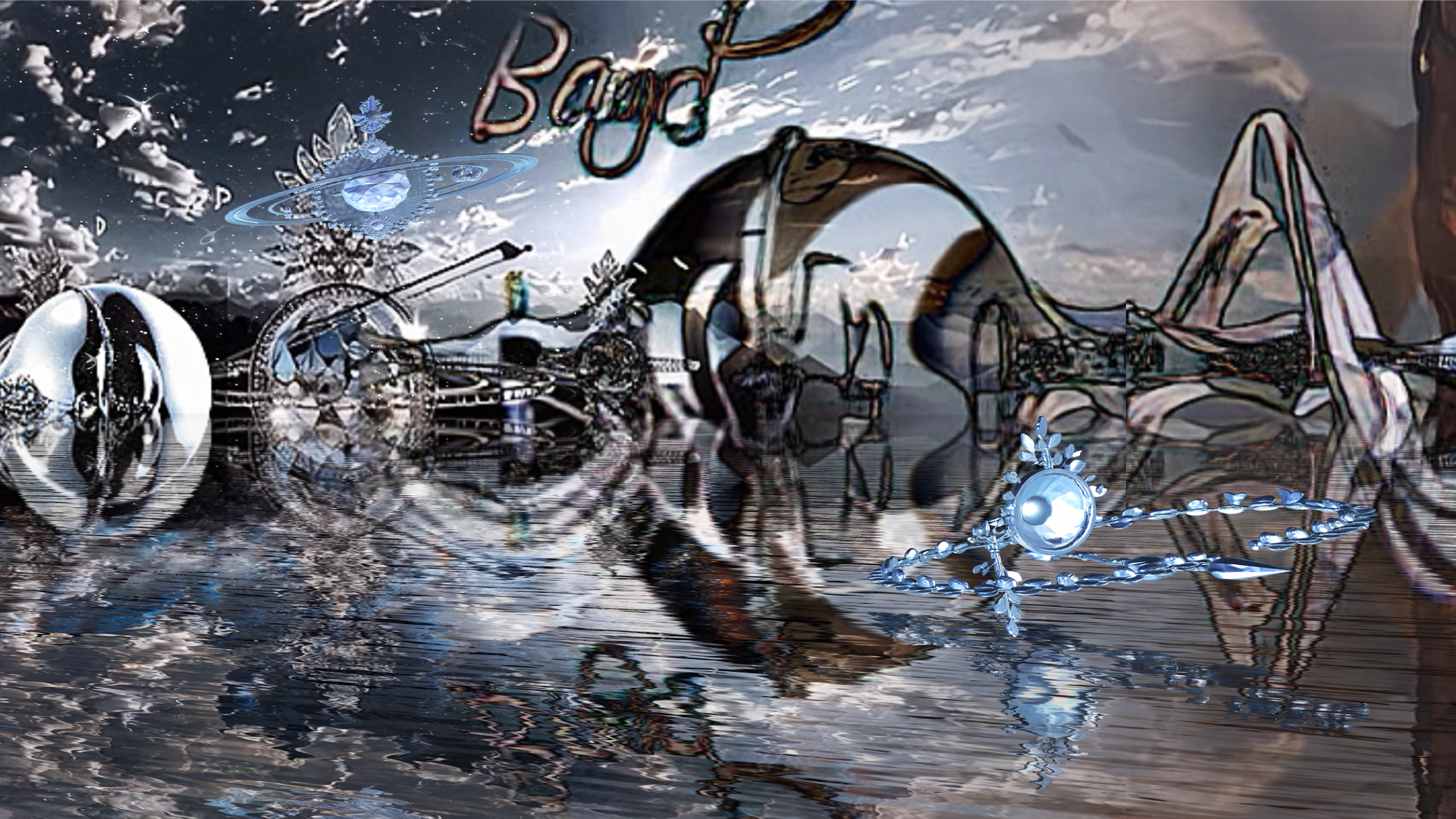

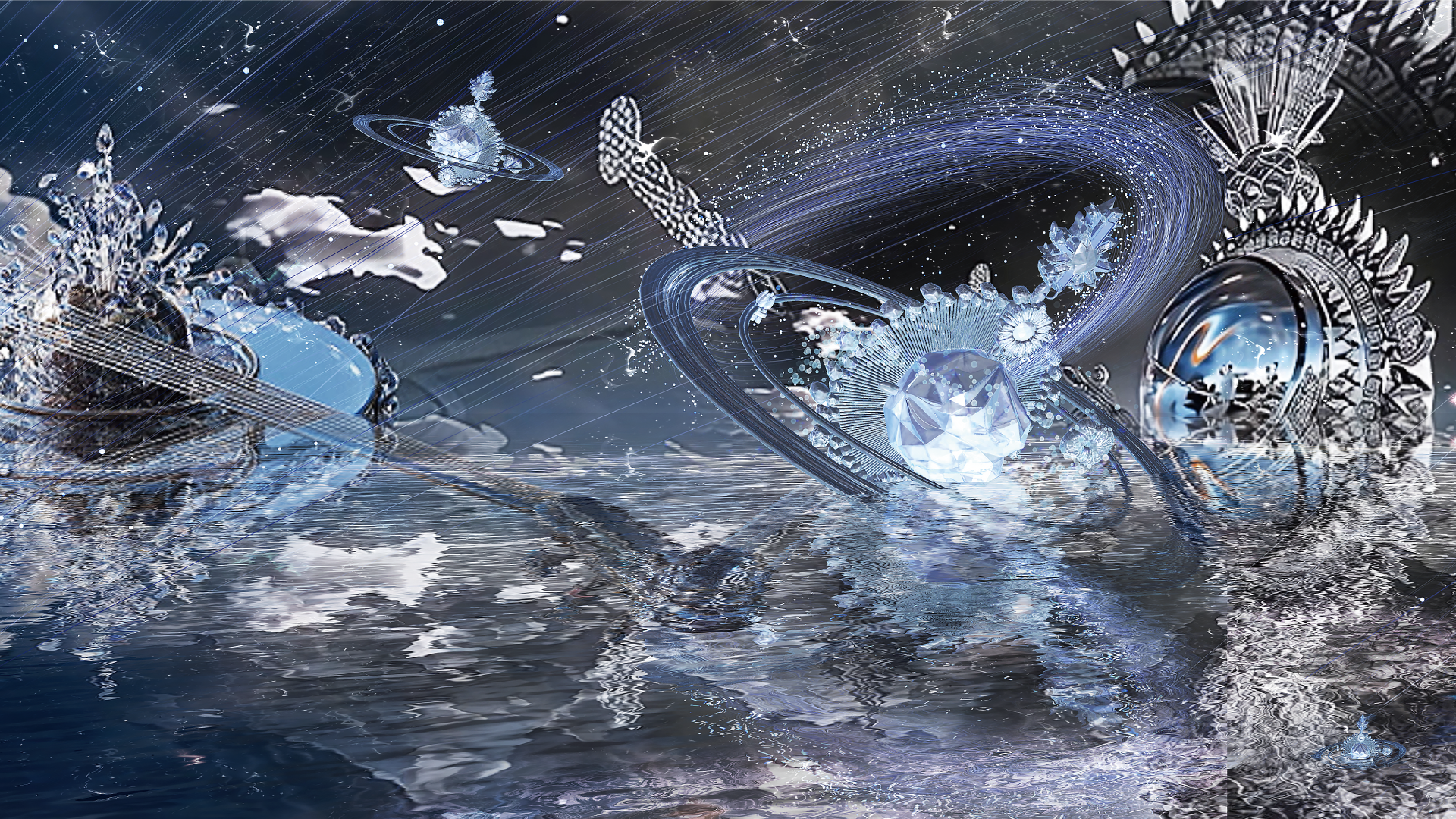
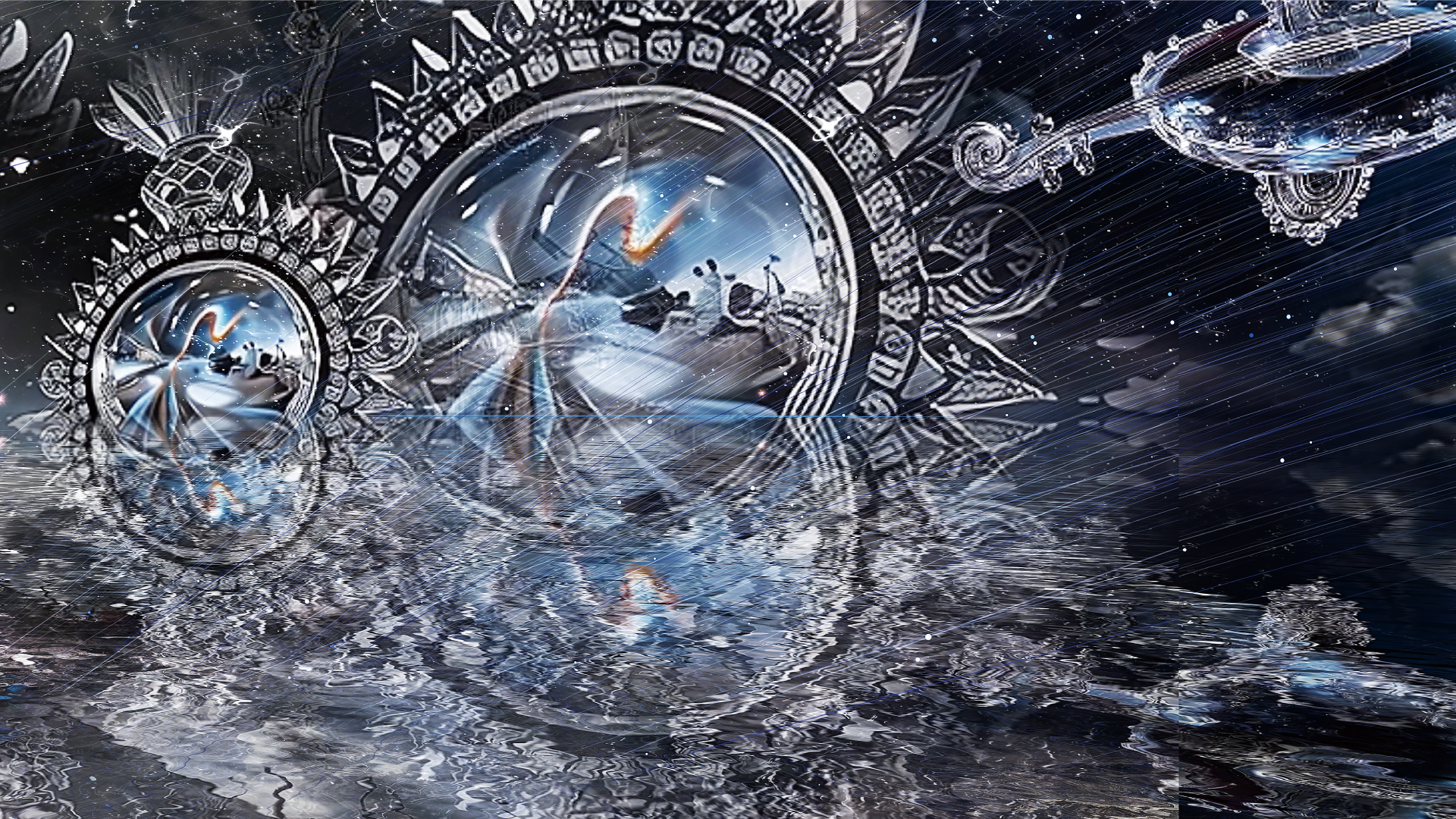
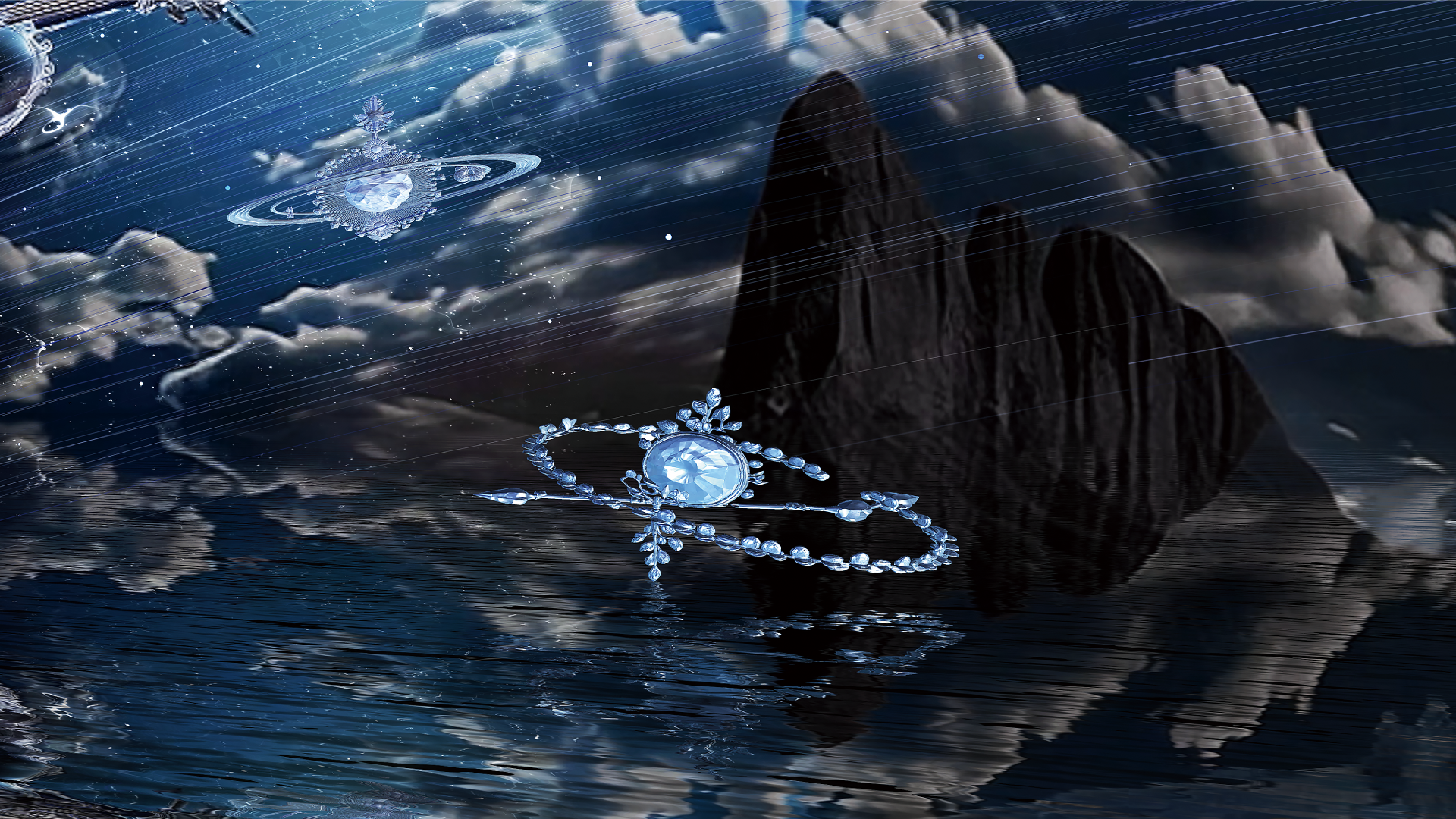
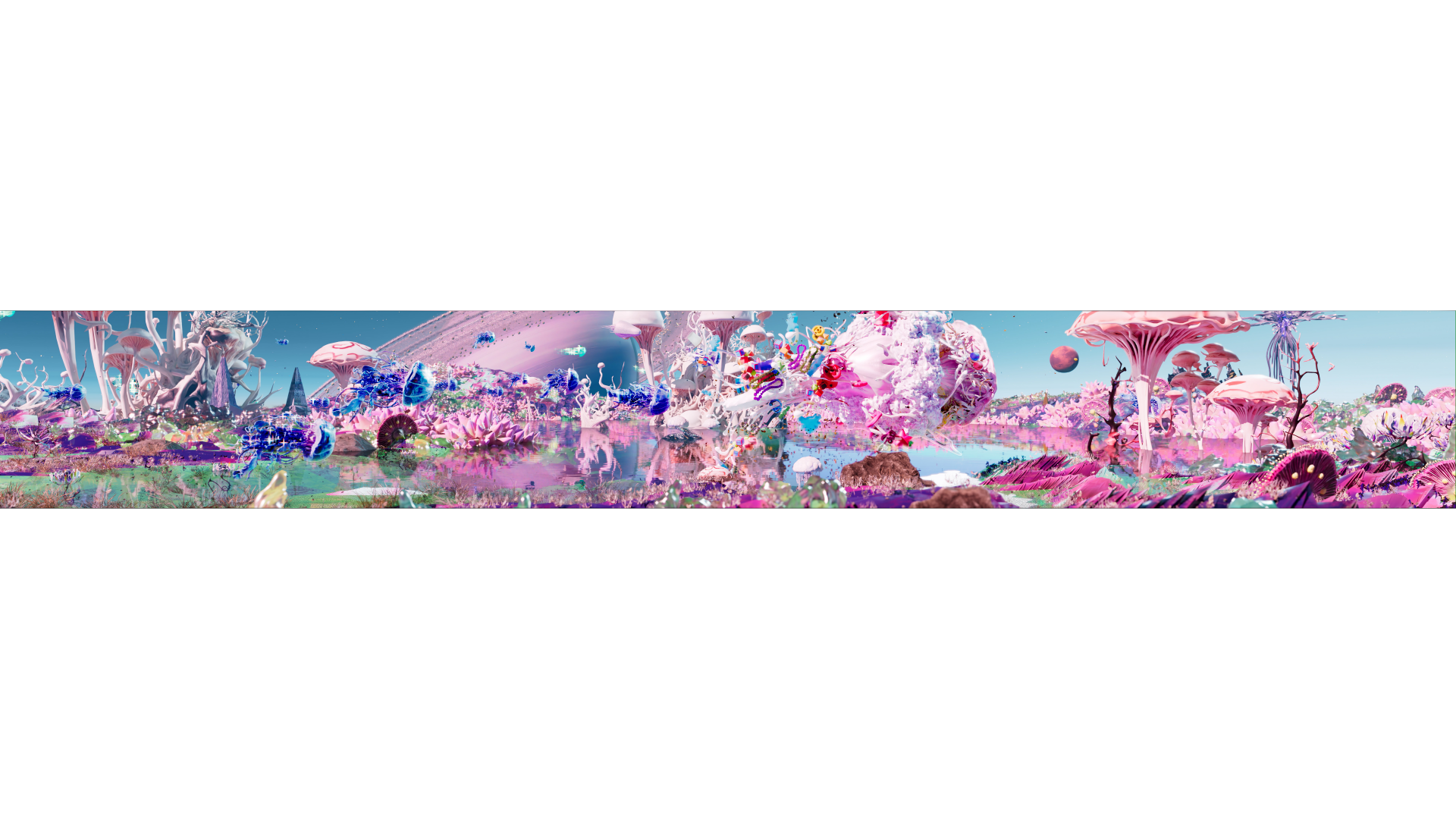
제2여객터미널 일반구역 3층 출국장 (LED, 77.2×4.3m)
《솔라소닉 밴드》 시리즈는 기후 위기 시대를 배경으로,
확장현실(XR)과 인공지능(AI) 기술을 활용하는 가상의 공연 밴드를
통해 인간과 환경, 기술의 새로운 관계를 탐구해왔다. 밴드는 단순한
음악 집단이 아니라 변화하는 지구 환경 속에서 지속 가능한 공존과
적응의 가능성을 실험하는 존재로 설정된다. 각각의 공연은 미래의
기후 조건과 사회적 환경을 상상하며, 기술과 예술이 결합된 또다른
형태의 퍼포먼스를 제안한다.
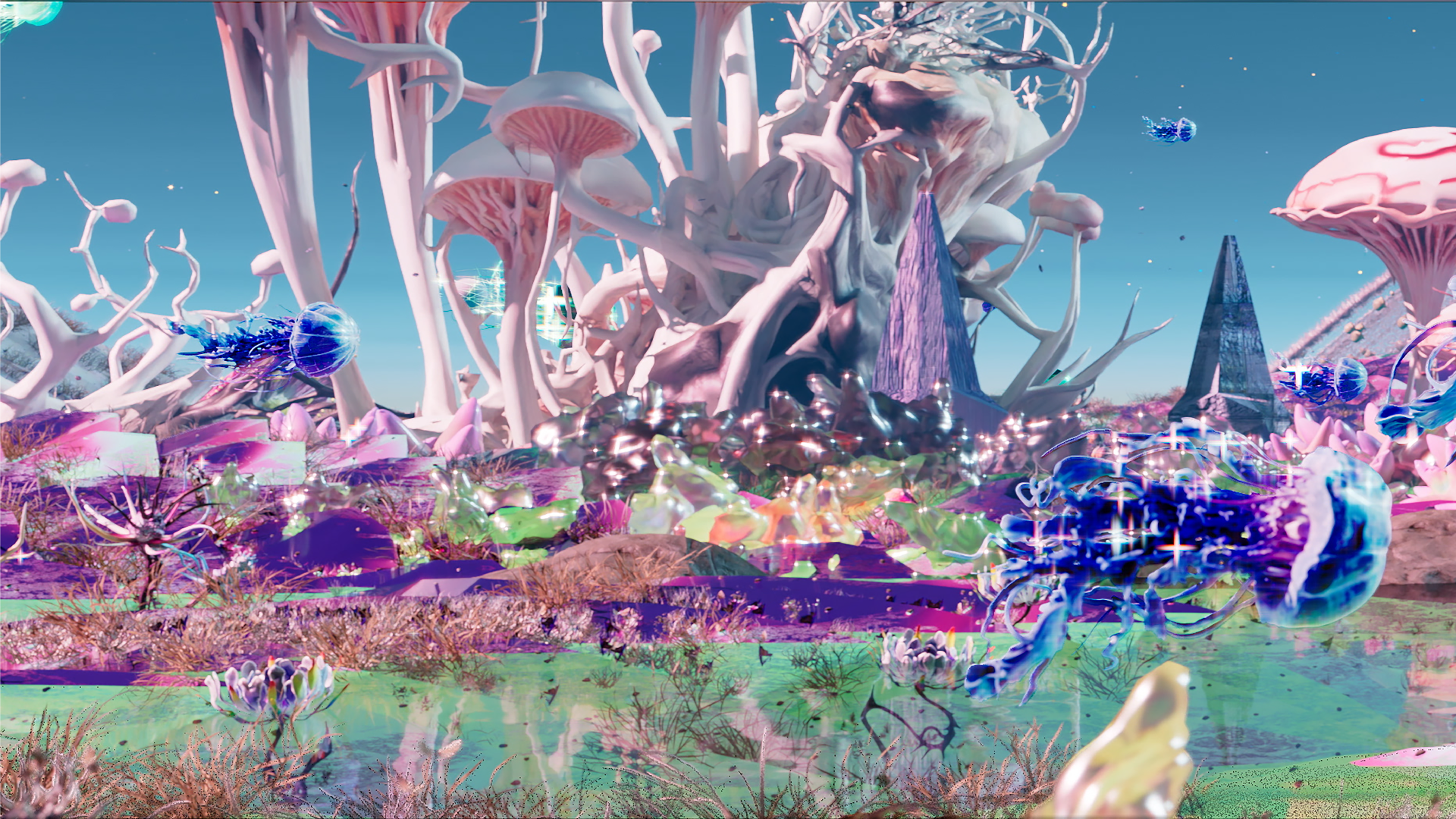
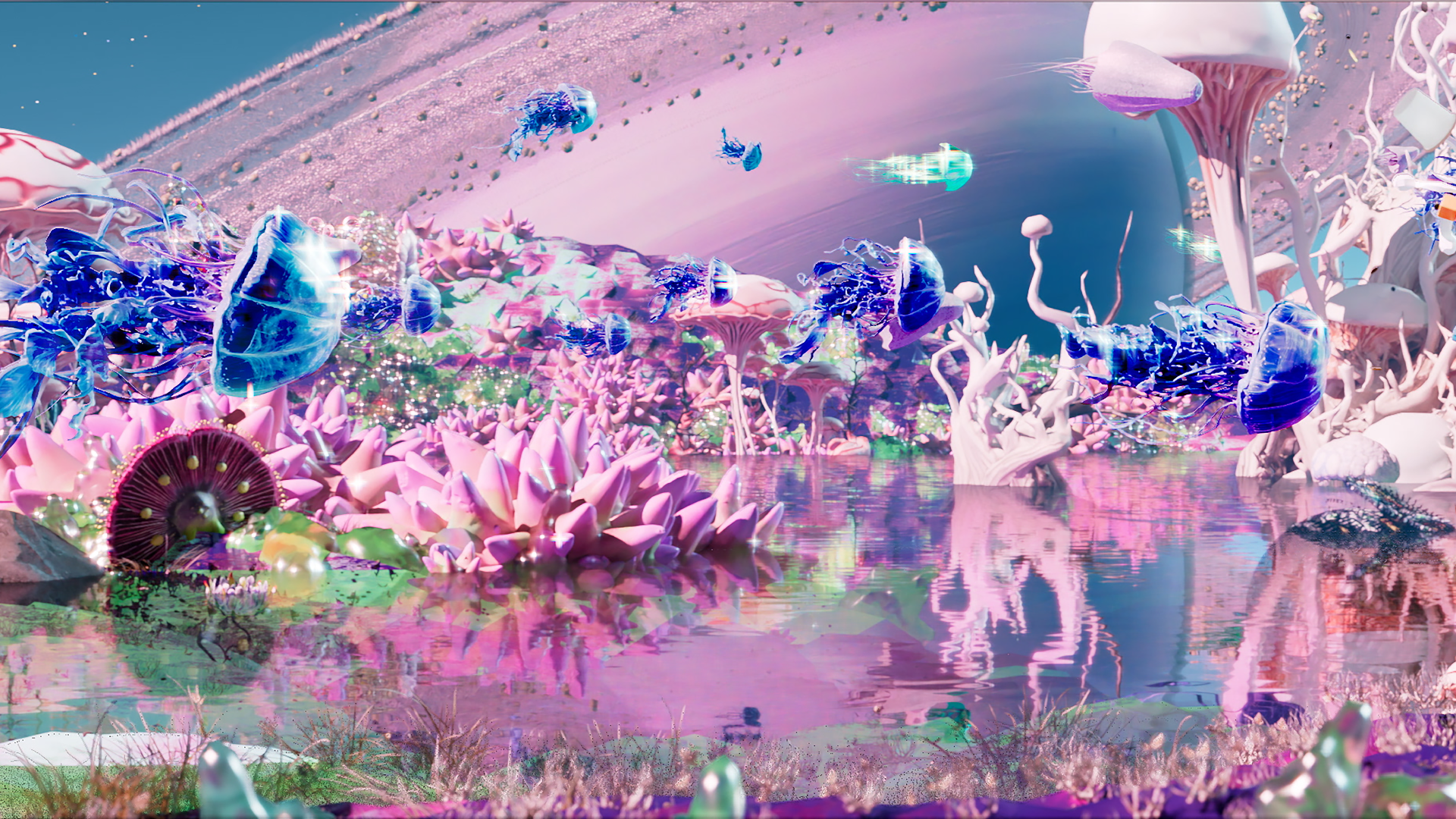
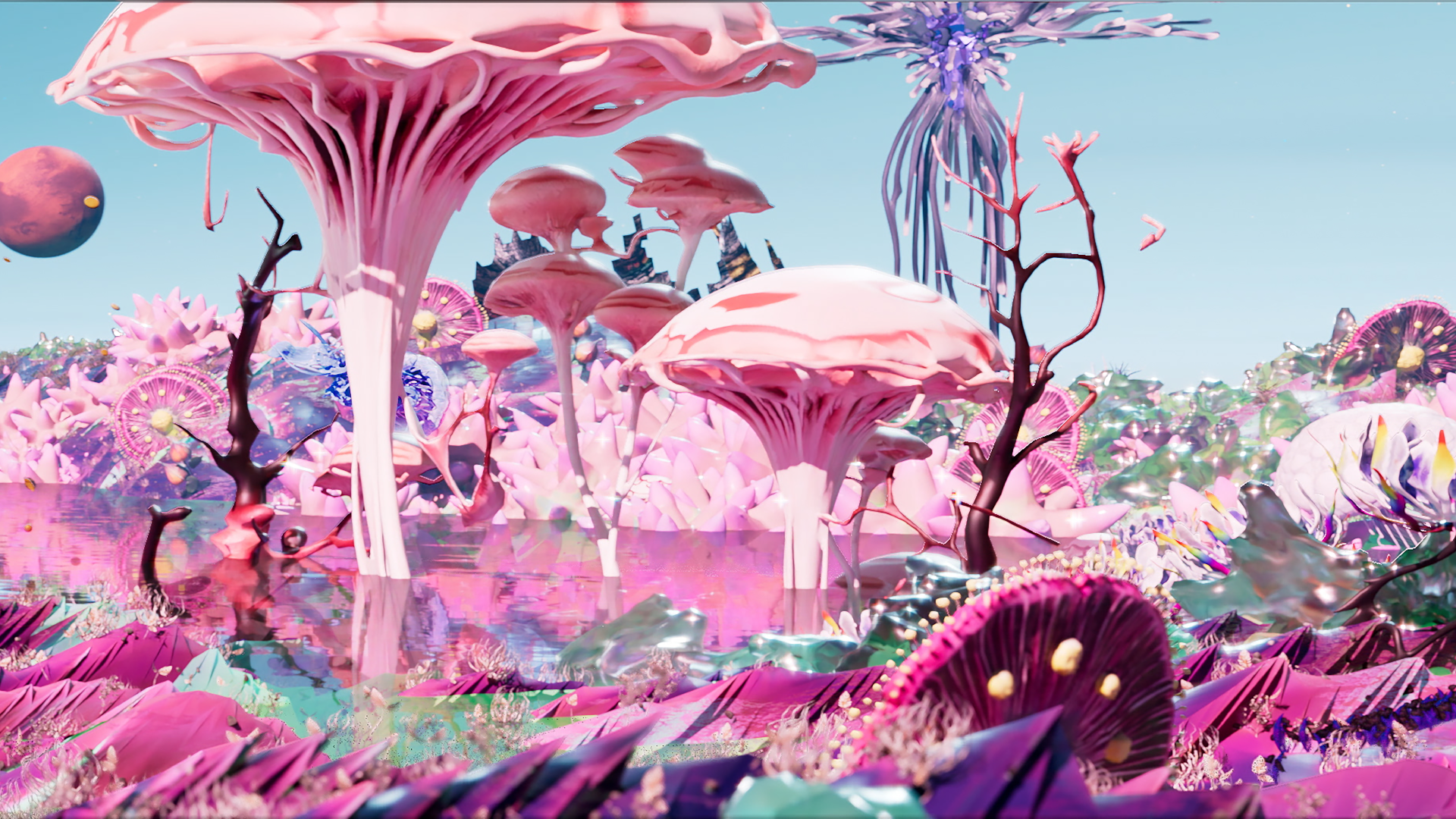
이번 시리즈 《환승 (In Transit)》에서 밴드는 기후계를 구성하는
여러 권역인 암석권, 생물권, 수권, 빙하권, 대기권을 횡단하며 아직
실현되지 않은 미래의 공연을 예행 연습한다. 이들은 각 권역이 지닌
고유한 물질성과 리듬, 그리고 기후 변화가 남긴 흔적들에 반응하며
이동한다. 밴드의 여정은 특정한 목적지에 도달하기 위한
이동이라기보다, 끊임없이 변화하는 환경 속에서 새로운 조건에
적응하고 관계를 형성해가는 과정에 가깝다.
작품이 펼쳐지는 공간은 아직 도착하지 않은 기후 풍경과 아직
완성되지 않은 공연이 교차하는 임시 경유지이다. 이곳에서 미래는
확정된 목적지가 아니라 여러 가능성이 잠시 머무르는 상태로
제시된다. 제목인 ‘환승(In Transit)’은 물리적 이동뿐 아니라 인간과
기술, 환경 사이의 관계가 지속적으로 재구성되는 과정을 의미한다.
관객은 이 경유지에 잠시 머무르는 여행자이자 또 다른 밴드 멤버가
되어, 변화하는 기후 환경 속에서 발생하는 적응과 협력, 그리고
이동의 과정을 함께 경험한다.
결국 《환승》은 도착의 서사가 아닌 이동의 서사를 다룬다. 작품은
불확실한 미래를 향해 나아가는 과정 자체에 주목하며, 기후 위기
시대를 살아가는 우리가 어떻게 서로 연결되고 변화에 대응할 수
있는지를 하나의 가상 밴드의 여정을 통해 은유적으로 제안한다.
Passenger Terminal 2, Public Area, 3F Departure Hall (LED,
77.2×4.3m)
Set against the climate crisis, the 《Solarsonic Band》 series
explores new human-environmental-technological relations via a
virtual band using eXtended Reality and artificial intelligence.
The band is not a mere musical group, but an entity testing
sustainable coexistence and adaptation. Imagining future
eco-social climates, each stage proposes an art-tech intertwined
performance.
In 《In Transit》, the band rehearses an unrealized future
performance, traversing five climate spheres: lithosphere,
biosphere, hydrosphere, cryosphere, and atmosphere. Moving in
response to each realm's materiality, rhythms, and climate traces,
their journey focuses on constant adaptation rather than a fixed
destination.
The space functions as a temporary layover where yet-to-arrive
landscapes and incomplete performances intersect. Here, the future
is not a fixed goal but a state of lingering possibilities. The
title 《In Transit》 means both physical relocation and the
continuous reconfiguration of human, tech, and environmental
relations. Audiences become pausing travelers and fellow band
members, collectively experiencing adaptation and cooperation amid
a changing climate.
Ultimately, 《In Transit》 addresses a narrative of movement over
arrival. Focusing on the process toward an uncertain future, the
work metaphorically suggests how we connect and respond to change
through a virtual band's journey.
솔라소닉 밴드: 환승
Solarsonic Band: In Transit
염인화
Inhwa Yeom
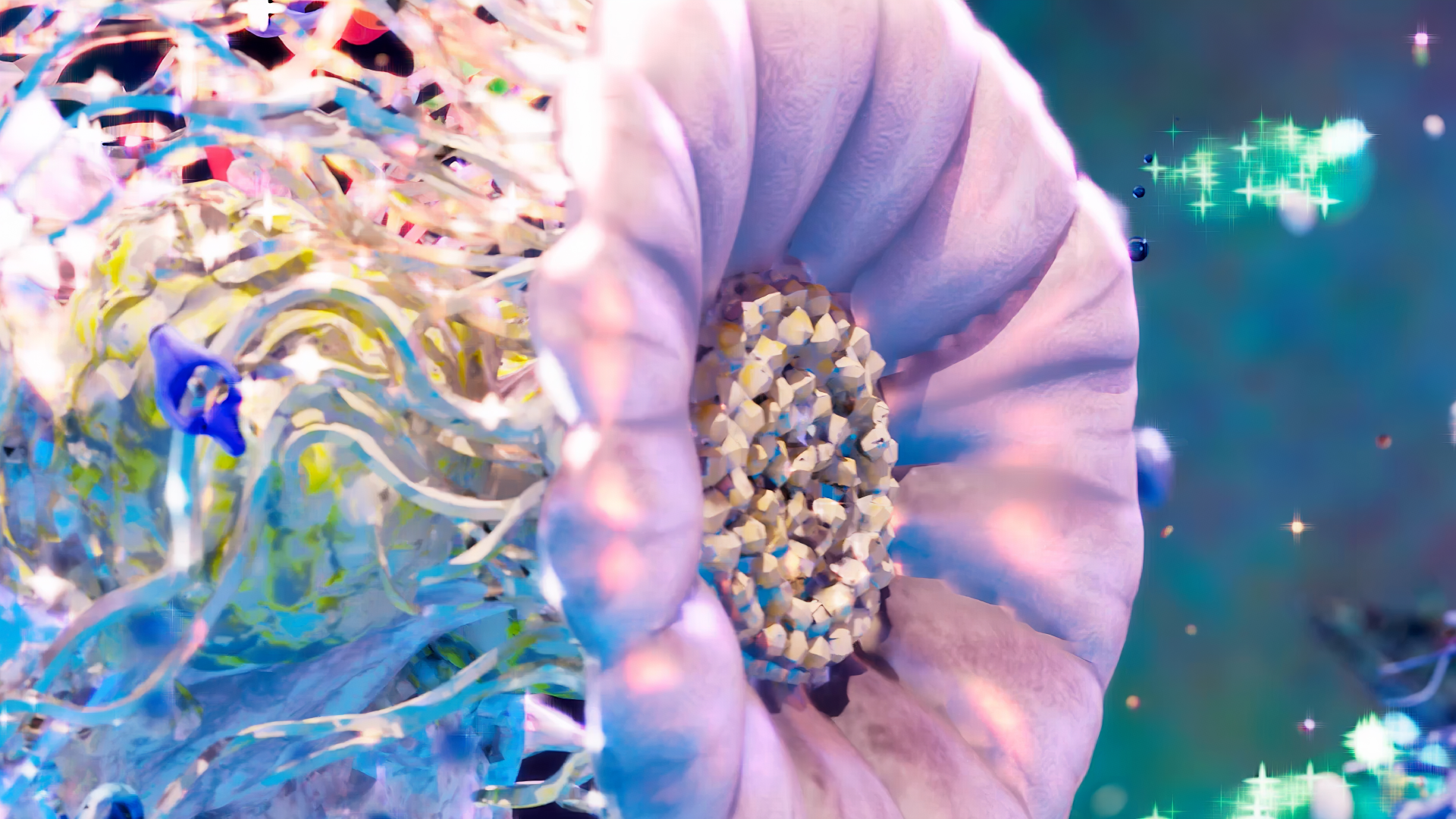

제2여객터미널 일반구역 3층 출국장 (LED, 77.2×4.3m)
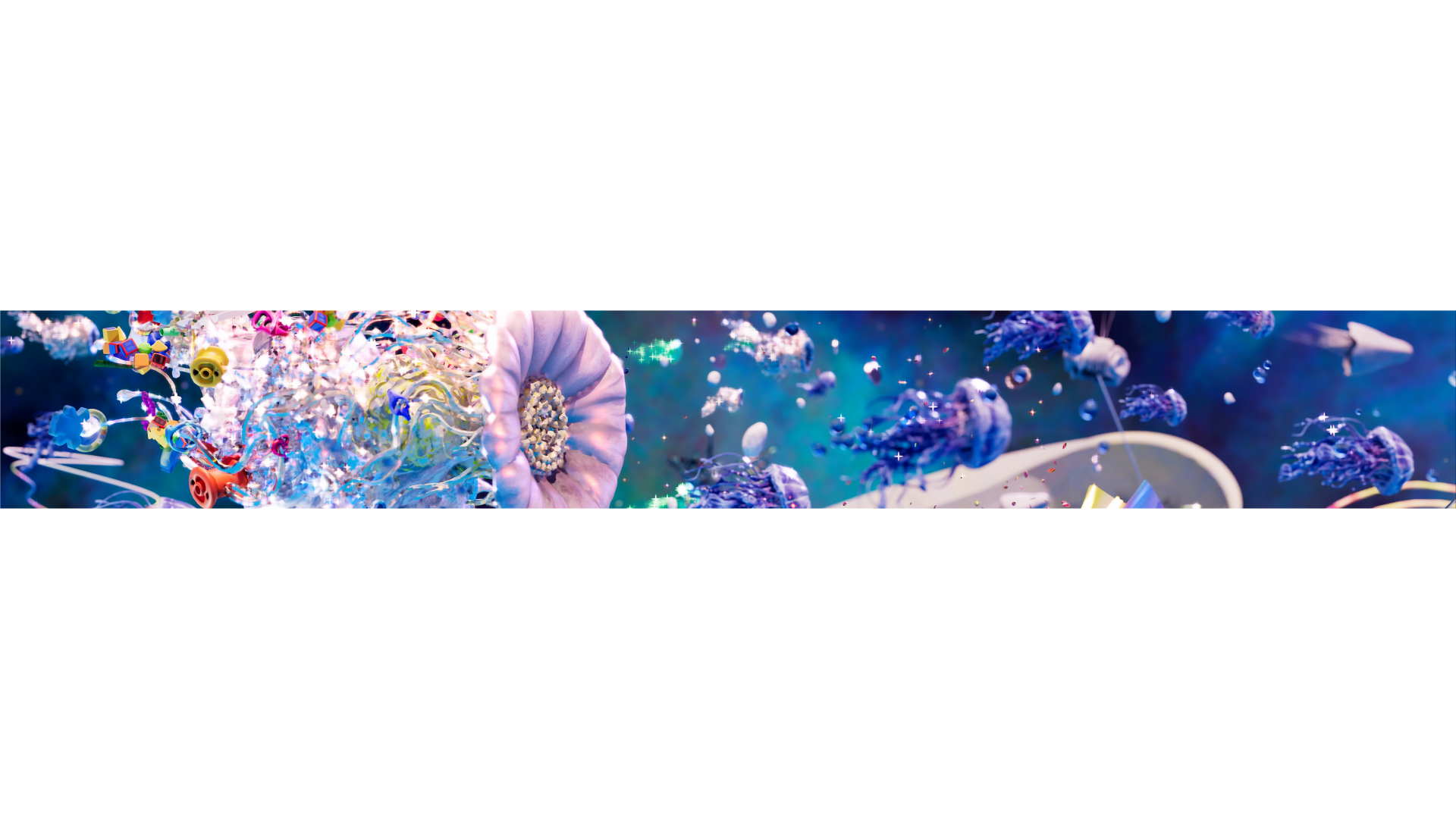
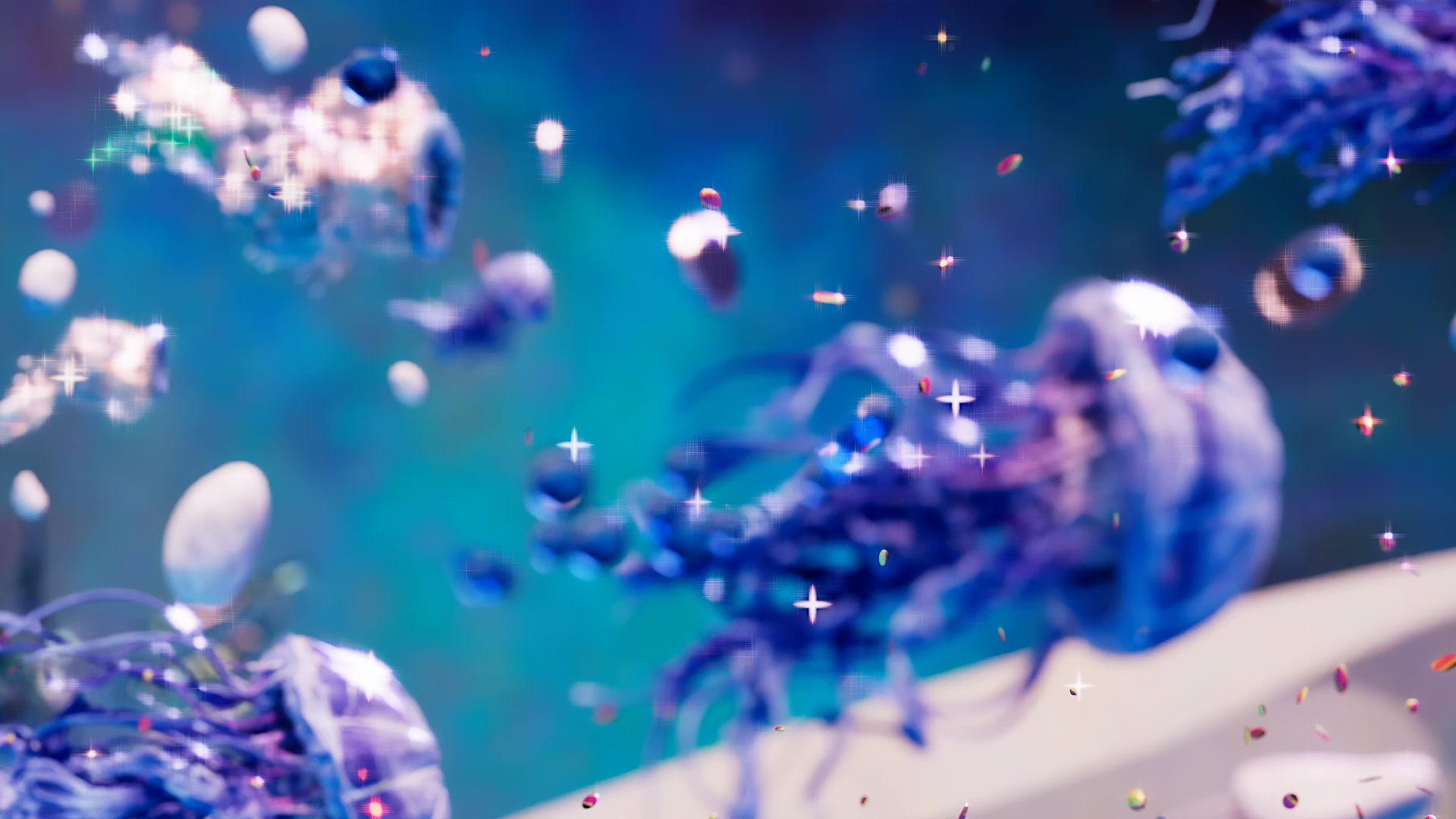
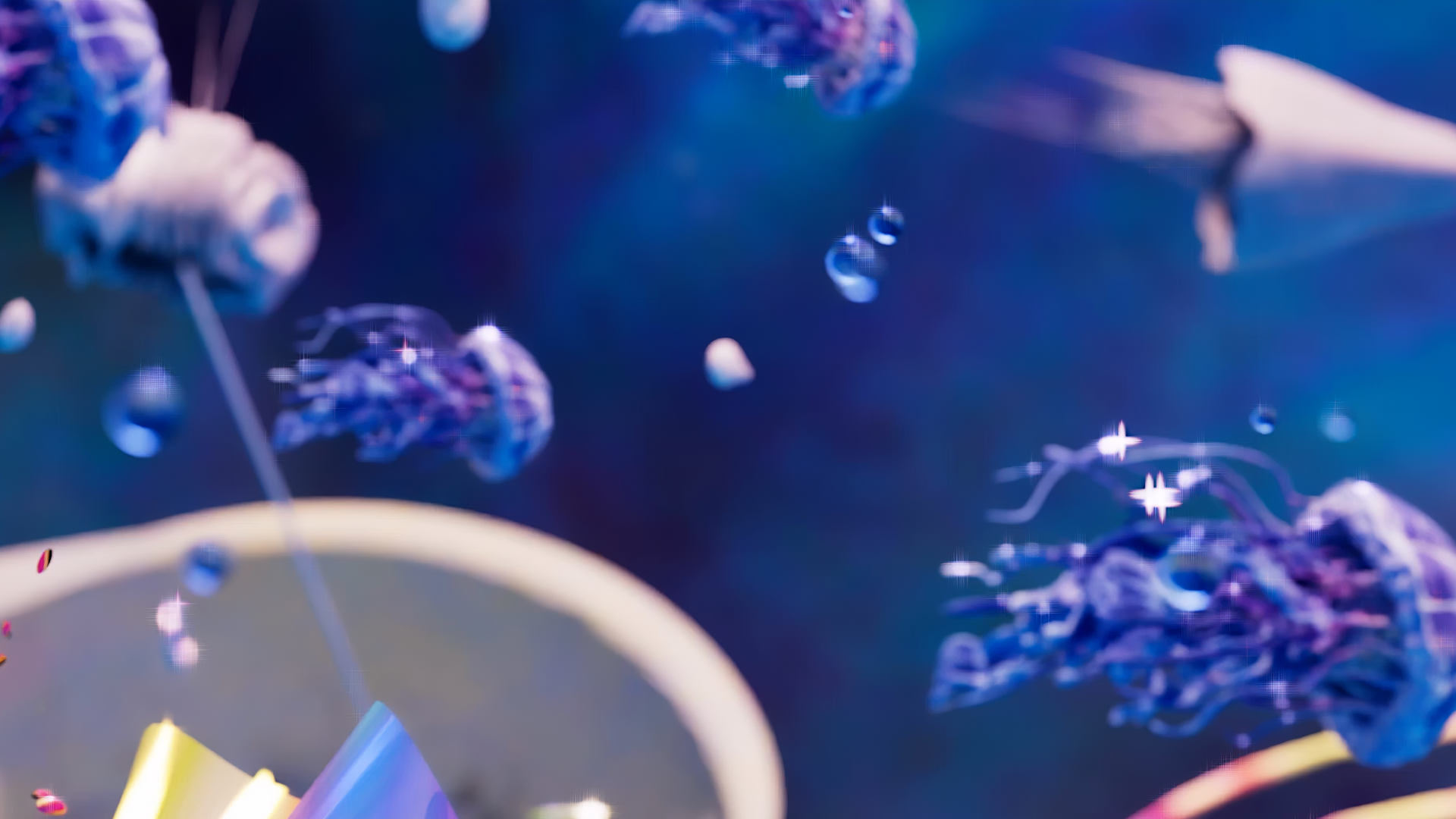
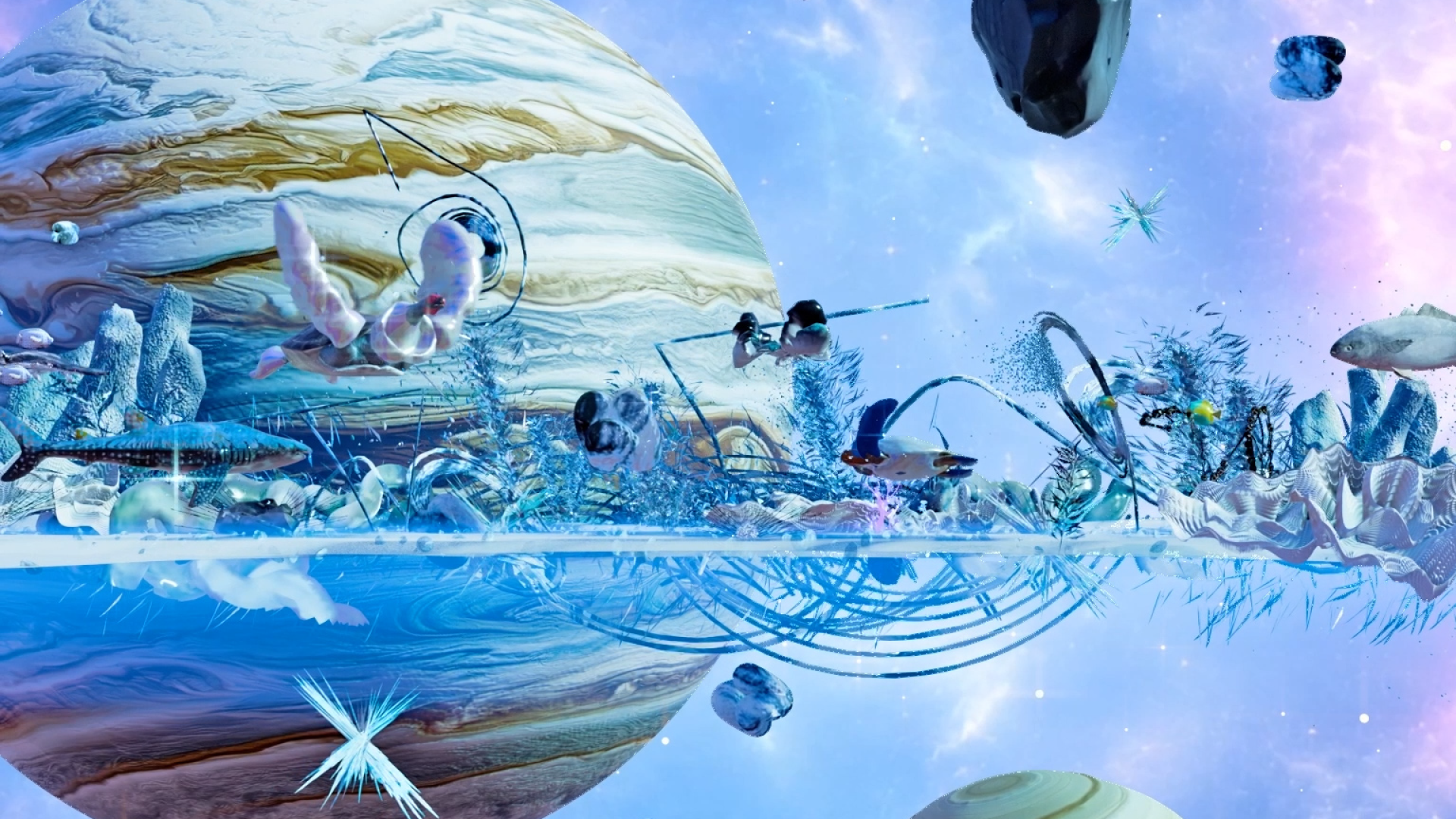
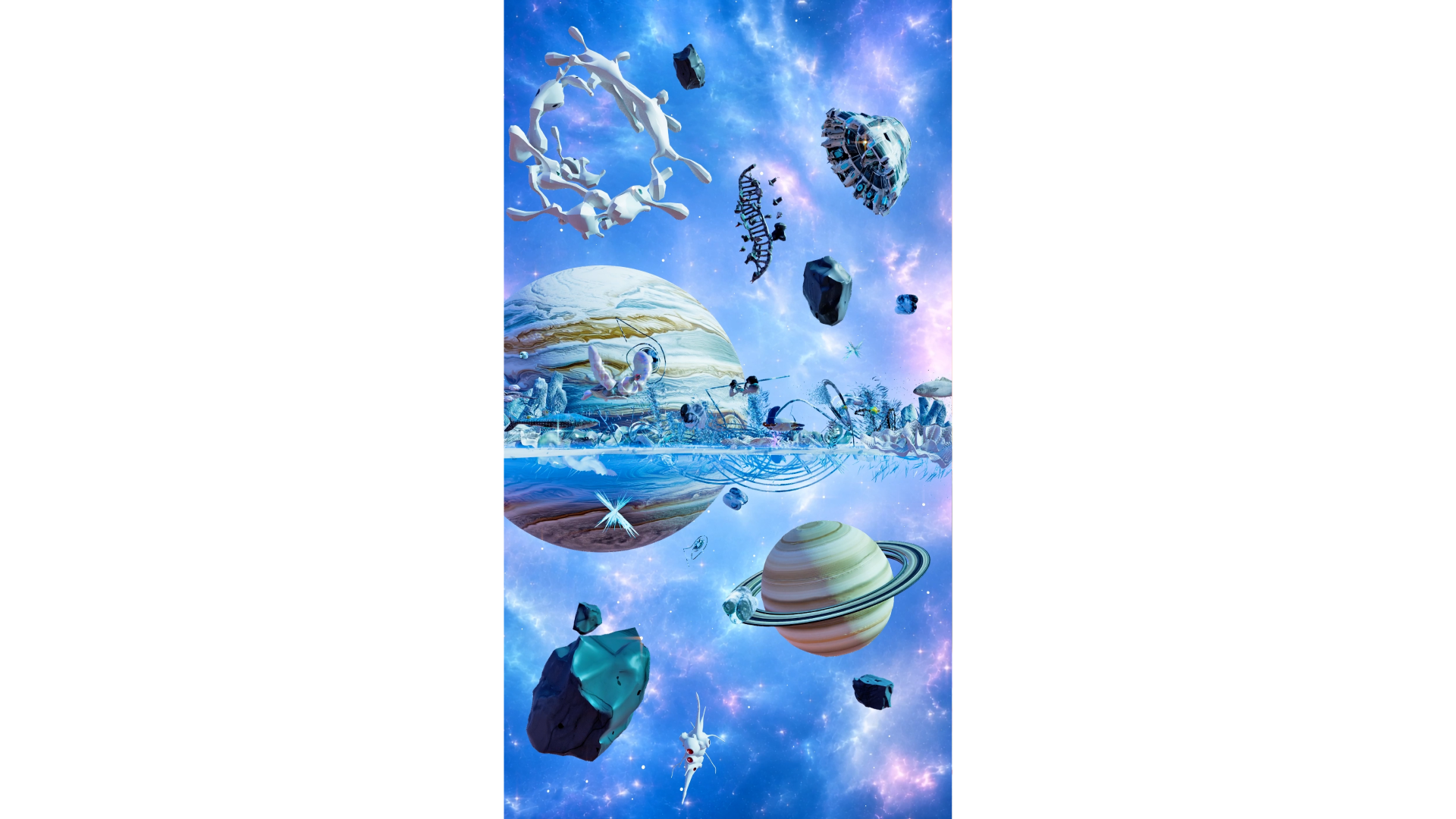
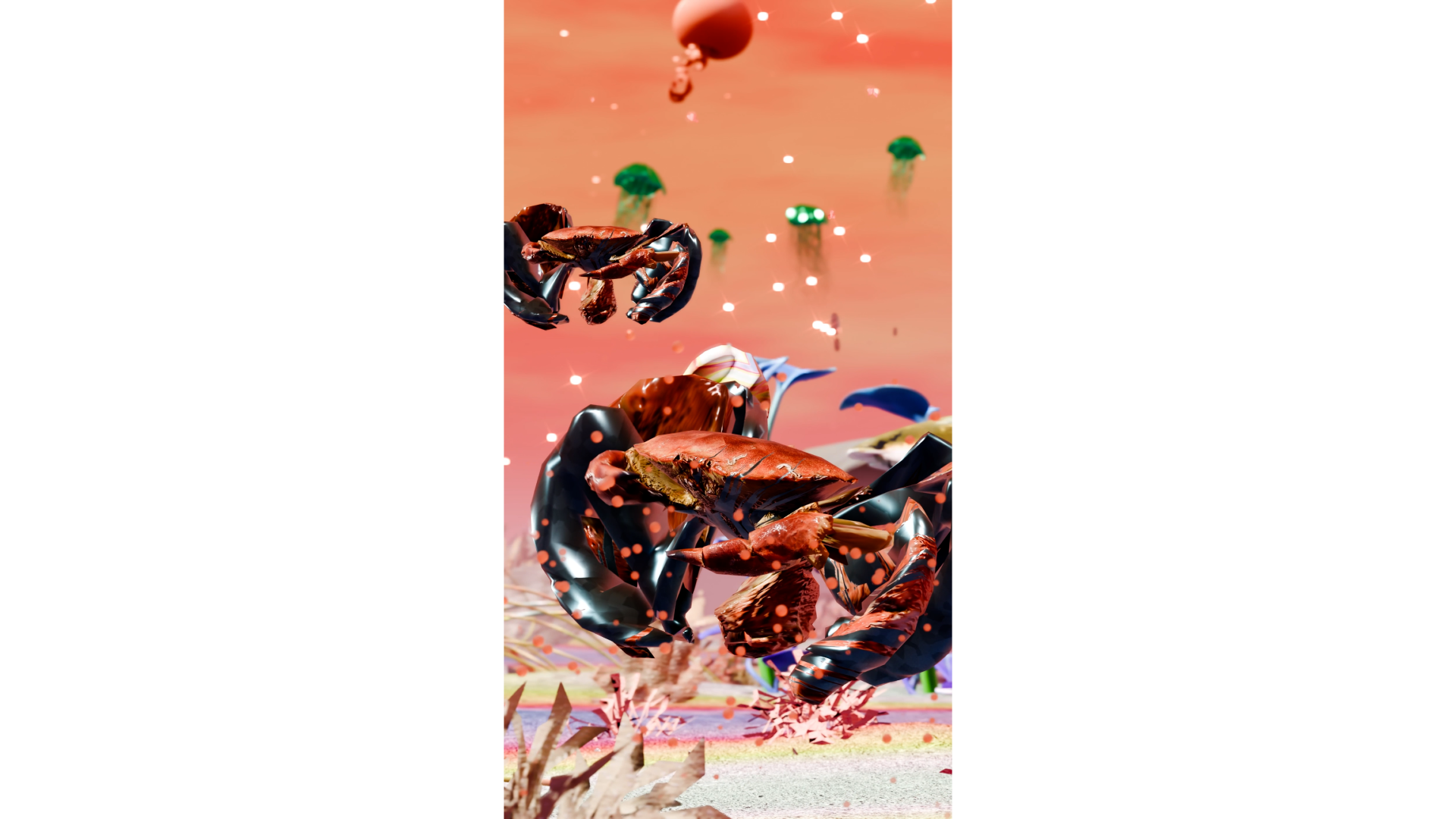
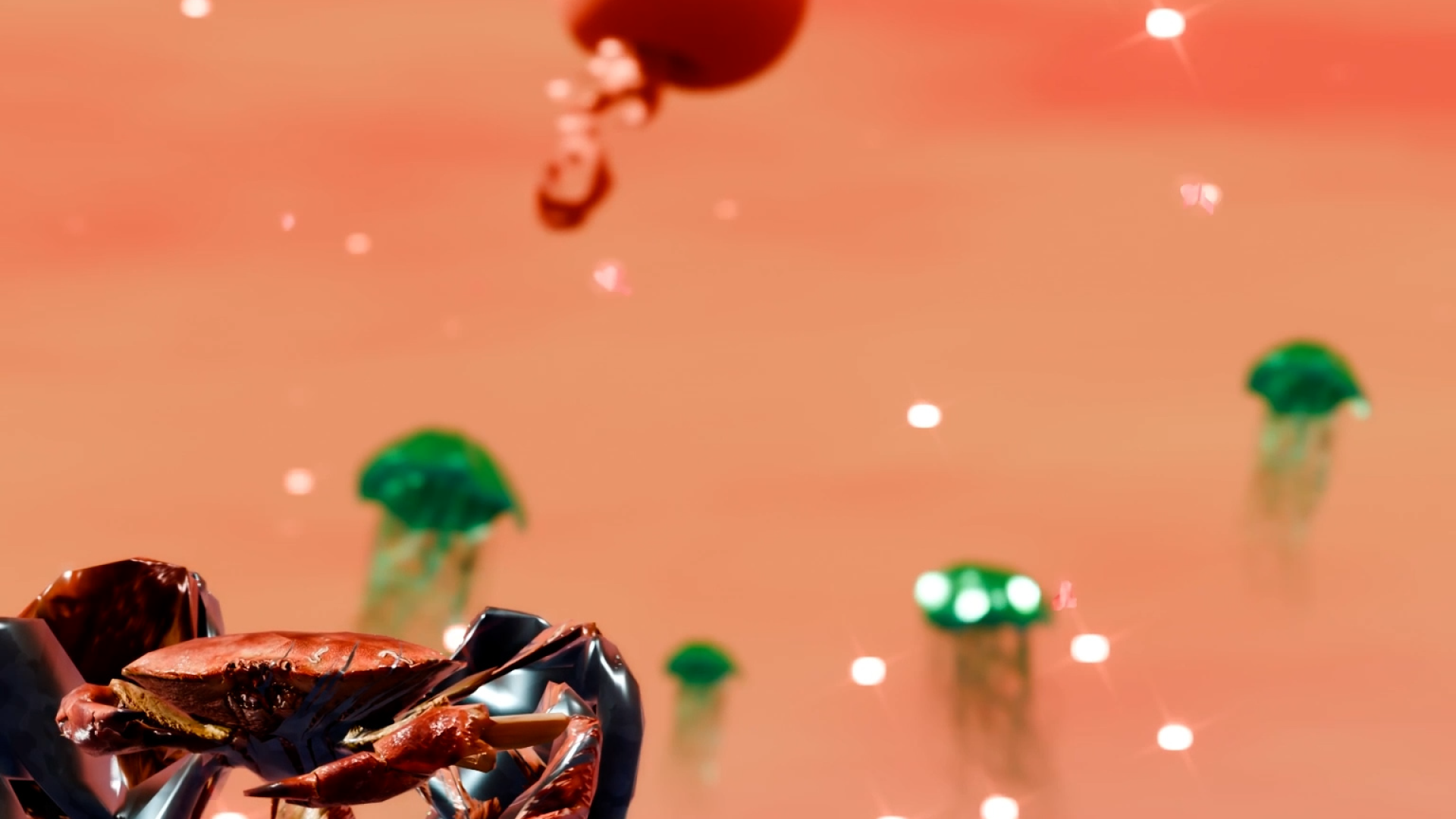
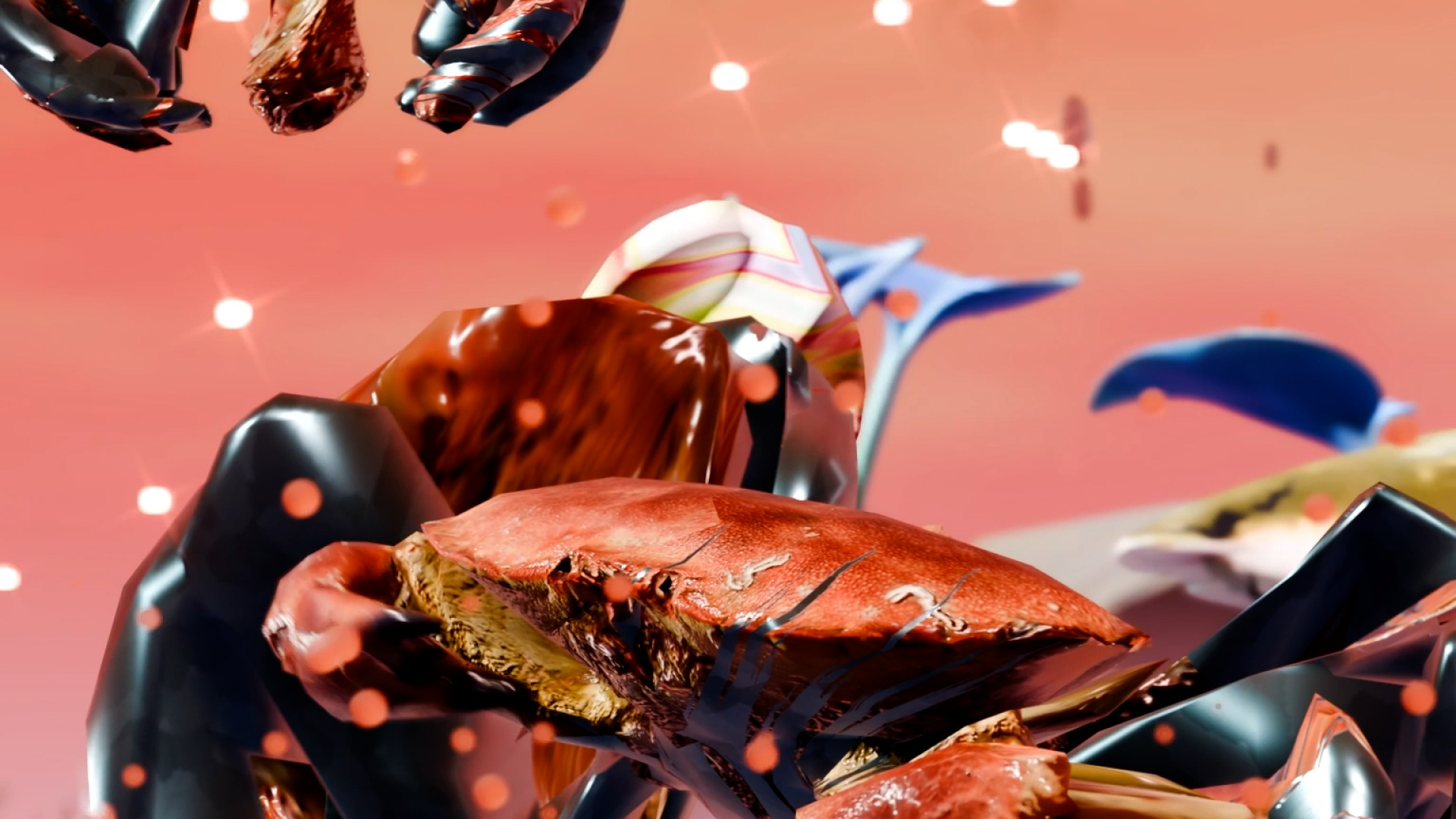
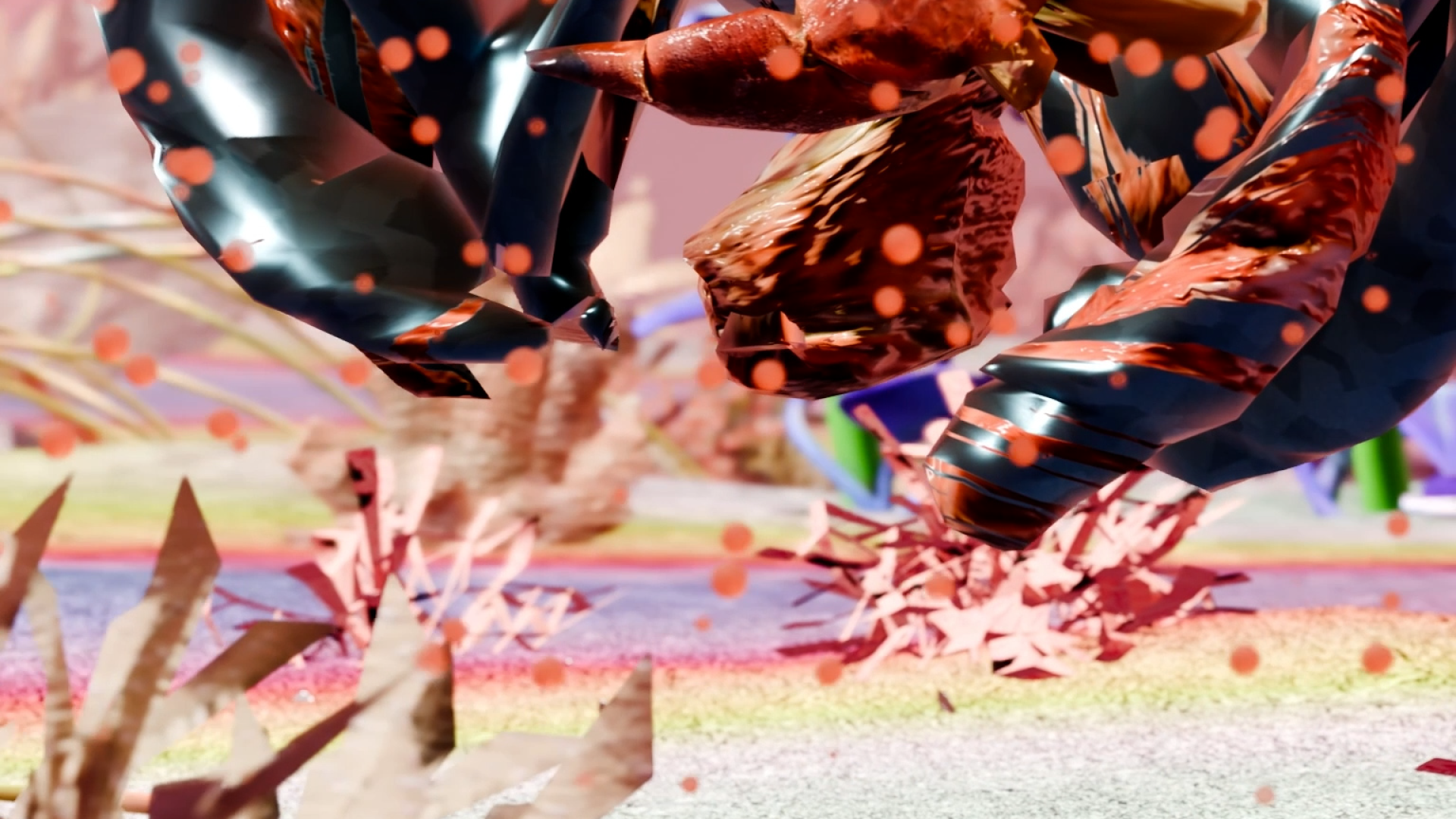
《도착한 그곳엔》은 인간과 생명체가 우주로 이동하며 형성하는
새로운 생태계를 상상한다. 이 세계의 해양 생물은 낯선 환경에
적응하며 형태와 빛깔을 바꾼 변형된 존재들이다. 지느러미는 다른
밀도의 공간을 헤엄치기 위해 변화하고, 몸의 빛은 어둠 속에서
스스로를 밝히기 위해 새로 태어난다. 그리하여 우주 이주는
무(無)에서의 새 출발이 아니라, 이미 변형된 환경과 존재를 또 다른
차원으로 확장하는 행위가 된다. 단절이 아닌 이어짐이며, 시작이 아닌
연속이다.
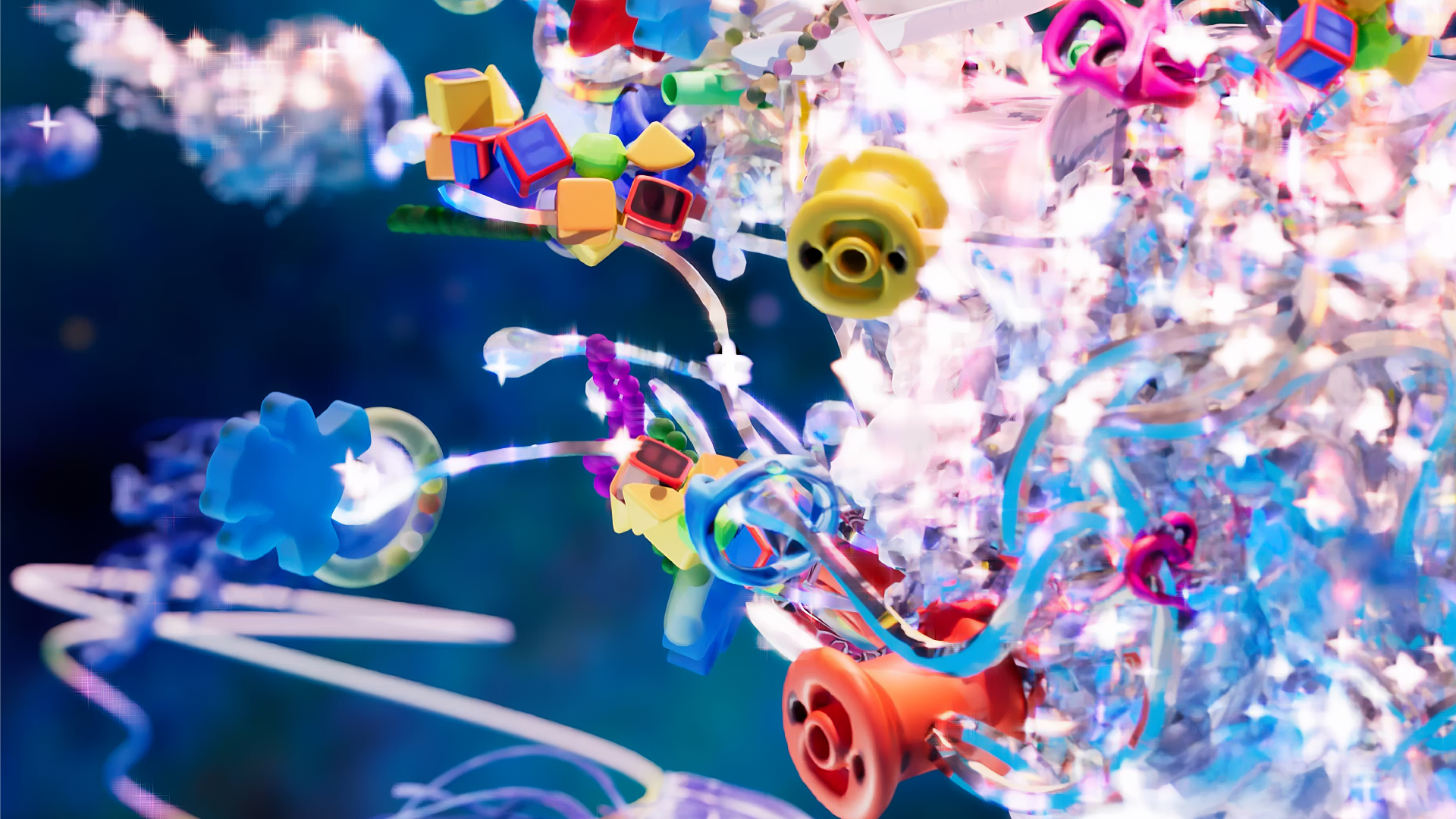
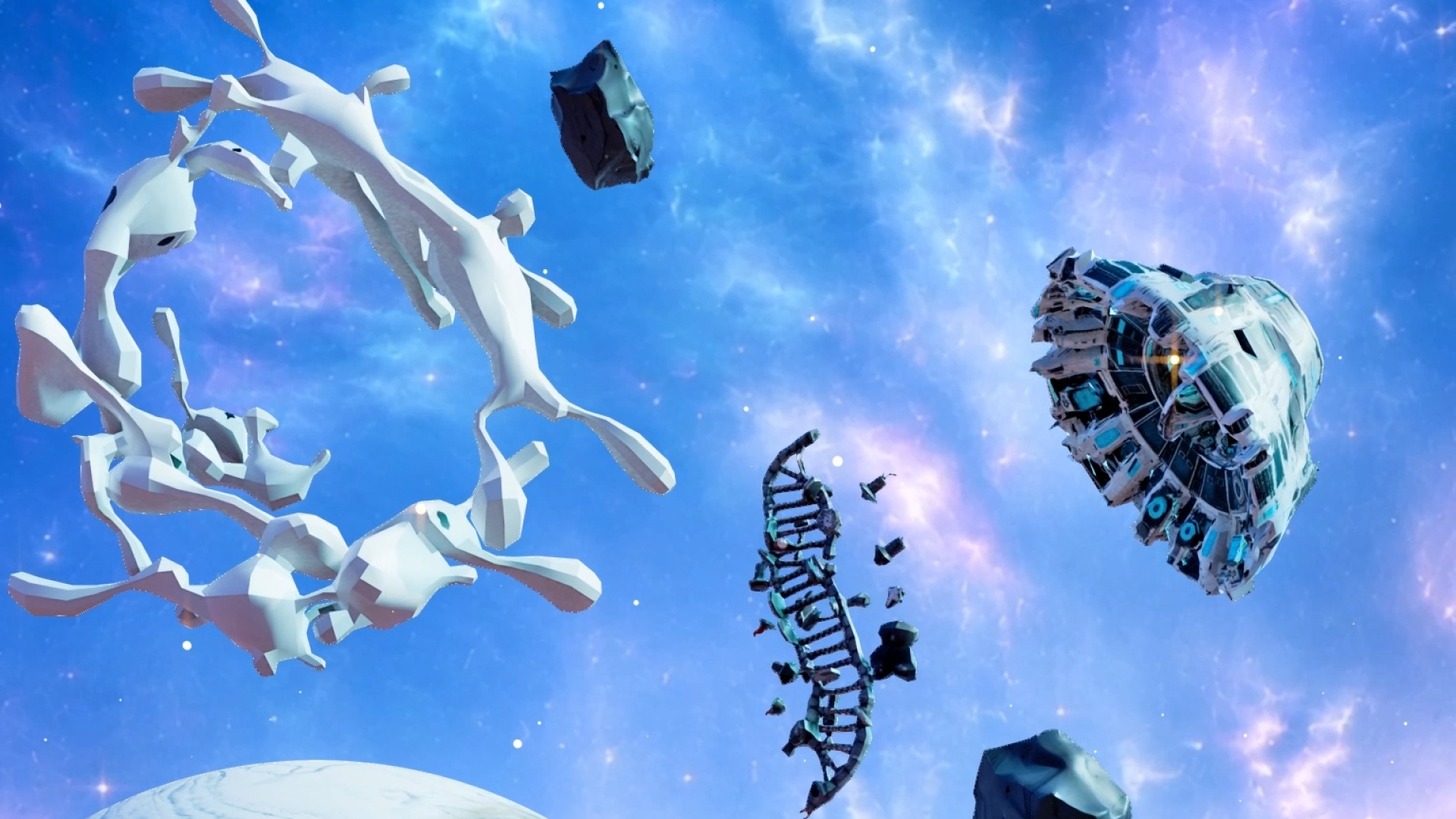
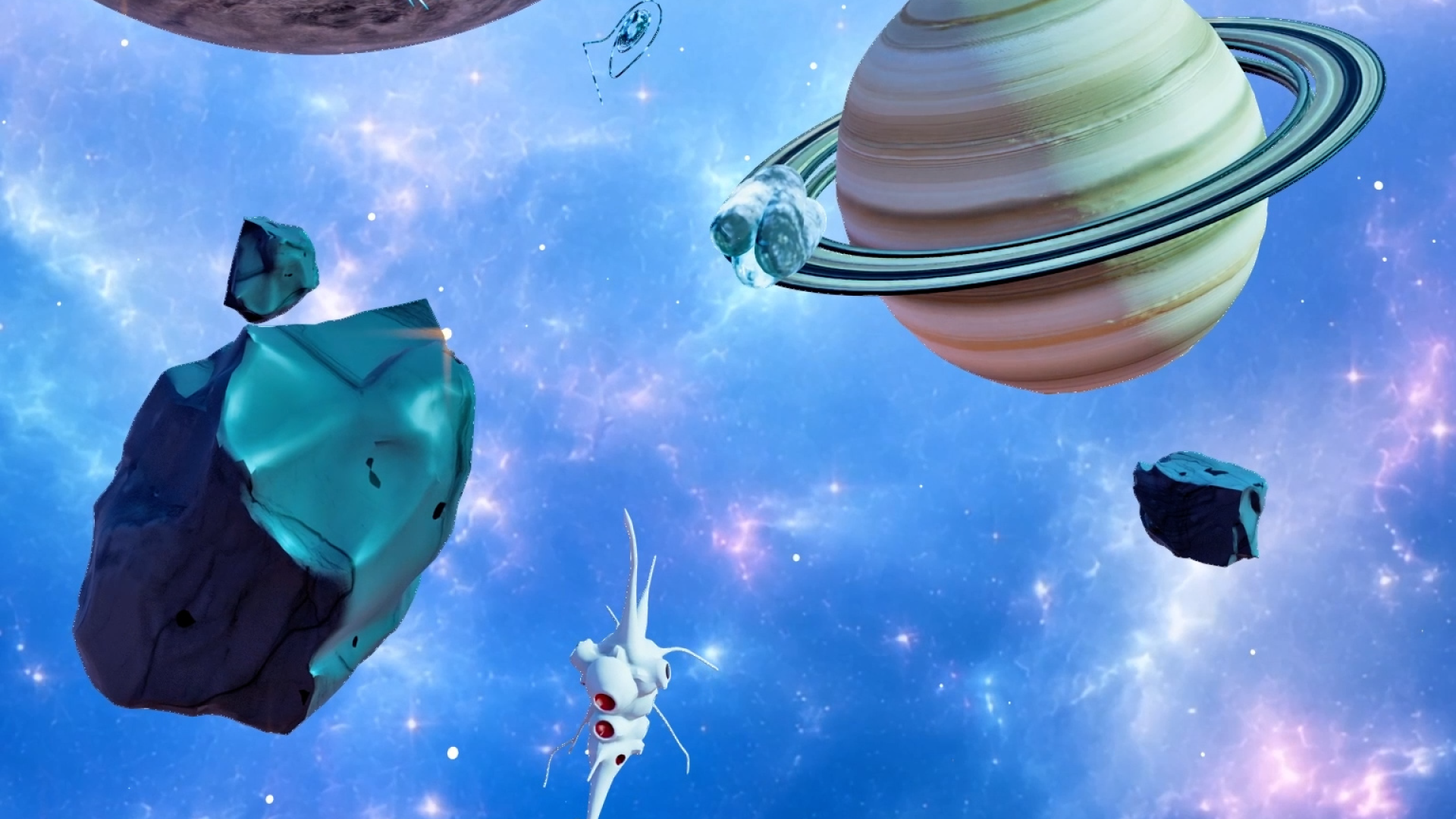
무중력 공간 속 유기체와 인공 물질은 구분 없이 함께 부유한다.
위아래가 사라진 그곳에서는 생명과 사물, 자연과 기술의 경계마저
흐려진다. 플라스틱 같은 인공 파편들은 단순한 잔여물이 아니라,
인류의 시간이 남긴 흔적이자 우주로 흩어지는 일종의 '우주적 DNA'다.
우리가 만든 것들이 우리보다 멀리, 오래 떠도는 셈이다. 이 파편들은
새로운 환경에서 다른 생명 형태와 결합해 낯선 생태계를 빚어낸다.
오염의 산물이 새로운 생명의 토대가 되는 역설 속에서, 작품은 끝과
시작이 맞물리는 순환을 그린다.
영상은 어두운 우주에 새로운 존재들이 하나둘 이주해오며 시작한다.
유기적 형상과 인공적 색채가 화면 위에서 뒤섞이고, 죽어 있던 공간은
천천히 호흡을 시작한다. 차갑던 어둠에 온기가 번지고 정지했던
세계가 움직이며, 우주는 인류와 그 흔적이 확장되어 깃드는 또 하나의
거주지로 재구성된다. 비어 있던 미지의 영역이 이들의 거처가 되는
것이다.
이 지점에서 작품은 오래도록 품어온 '떠남'의 의미를 조용히
뒤집는다. 우리는 지구를 떠나는 것이 아니다. 우리 자신과 환경, 이미
돌이킬 수 없이 변형된 지구를 함께 안고 우주로 이동할 뿐이다. 이는
모든 것을 두고 떠나는 정화된 시작이 아니라, 지구에서의 모든
흔적—아름다움과 상처, 생명과 오염을 동반한 확장이다. 새로운 세계로
향한다는 것은 과거를 지우는 일이 아니라 끝내 데리고 가는 일임을
작품은 담담히 일러준다.
본 영상은 과학 시각화의 선구자인 독일 생물학자 에른스트 헤켈의
일러스트를 재해석하고 인공지능과 협업해 제작했다. 헤켈이
현미경으로 보이지 않는 생명체를 관찰했다면, 작가는 데이터와 AI로
보이지 않는 세계와 미래 생명체를 시각화한다. 헤켈의 도판에서
영감받아 탄생한 다양한 생명체들이 지구를 떠나 우주의 미지 행성으로
이주하여, 그들만의 생태계를 이루고 삶을 화려하게 꾸려가는 모습을
담았다.
출국장 앞, 떠남이 시작되는 가장 큰 화면 위에서 《The Great
Arrival》은 조용히 묻는다. 우리는 정말 새로운 곳으로 떠나는
것일까, 아니면 우리가 만든 세계를 그저 더 멀리 펼쳐놓는 것일까.
그리고 끝내 이렇게 속삭인다. 어쩌면 우리는 이미 오래전부터,
우주에서 살아가고 있었는지도 모른다고.
Passenger Terminal 2, Public Area, 3F Departure Hall (LED,
77.2×4.3m)
《The Great Arrival》 imagines a new ecosystem formed as humanity
and living organisms migrate into deep space. Here, marine life
adapts to alien environments, mutating in form and color; fins
evolve for altered space density, and bioluminescence ignites to
pierce the darkness. Space migration is thus not a blank-slate
reboot, but an extension of already-modified environments into
another dimension—a continuity rather than a rupture, a succession
rather than a beginning.
In zero-gravity, organic bodies and artificial materials float
indistinguishably, blurring the boundaries between life and
object, nature and technology. Synthetic debris like plastics are
not mere waste, but traces of human epochs—a techno-organic
'cosmic DNA.' What we made wanders farther and outlasts us.
Merging with other life-forms to shape a strange ecosystem, this
pollution paradoxically becomes a bedrock for new life, tracing a
cyclic loop where ends intertwine with beginnings.
The video opens as new entities populate the dark cosmos. Organic
contours blend with artificial hues as a dead void begins to
breathe, spreading warmth and motion. The universe is reconfigured
into another habitat where humanity and its footprints expand.
Through this, the work quietly subverts the long-held meaning of
"departure." We are not abandoning Earth; we are migrating into
space carrying ourselves, our environments, and our irreversibly
altered planet. This is an extension accompanied by all earthly
traces—beauty, scars, life, and pollution. Heading to a new world
means taking our past along, not erasing it.
This video reinterprets illustrations by Ernst Haeckel, a
pioneering German biologist, produced in collaboration with AI.
While Haeckel used microscopes to observe invisible microscopic
life, Han utilizes data and AI to visualize unseen realms and
future organisms. Inspired by Haeckel’s plates, various creatures
migrate from Earth to unknown planets, establishing their own
vibrant ecosystems and flourishing in cosmic habitats.
On the massive screen at the departure hall where journeys begin,
《The Great Arrival》 poses a quiet question: Are we truly leaving
for a new place, or simply unfolding the world we already created
further away? Ultimately, it whispers: Perhaps we have already
been living in the universe all along.
도착한 그곳엔
The Great Arrival
한윤정
Yoon Chung Han
제2여객터미널 3층 면세구역 (LED, 4×7.2m)
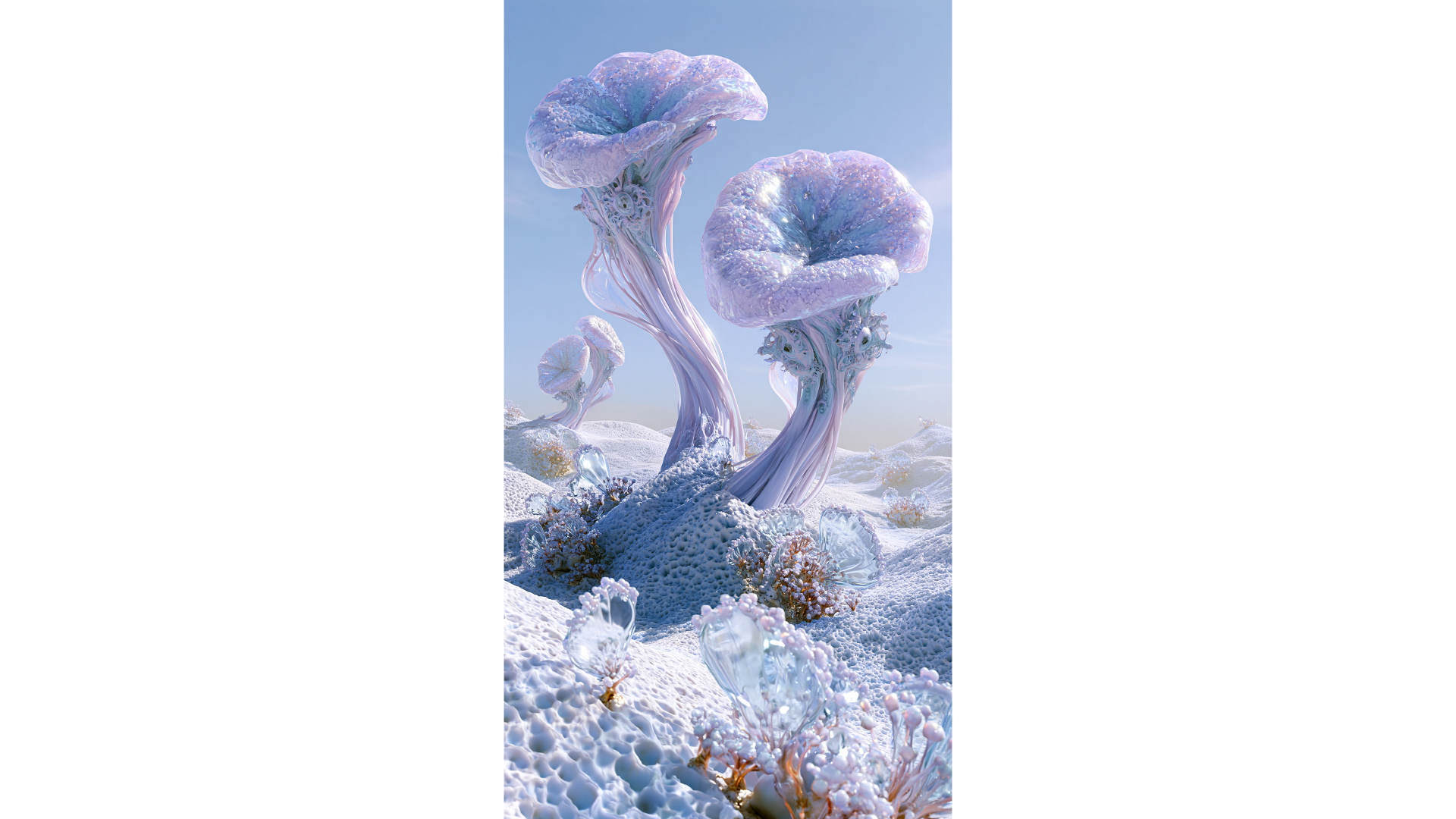
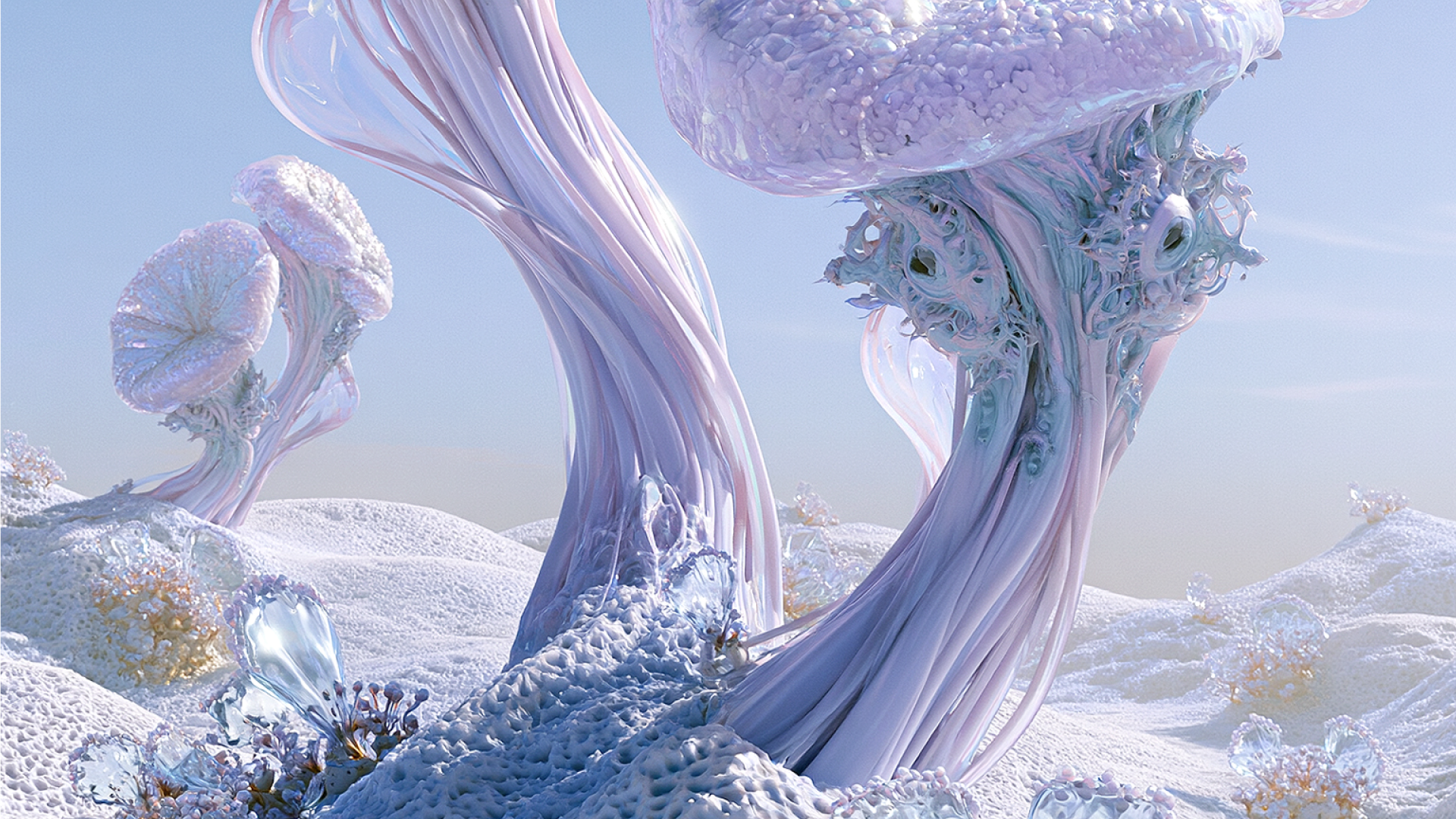
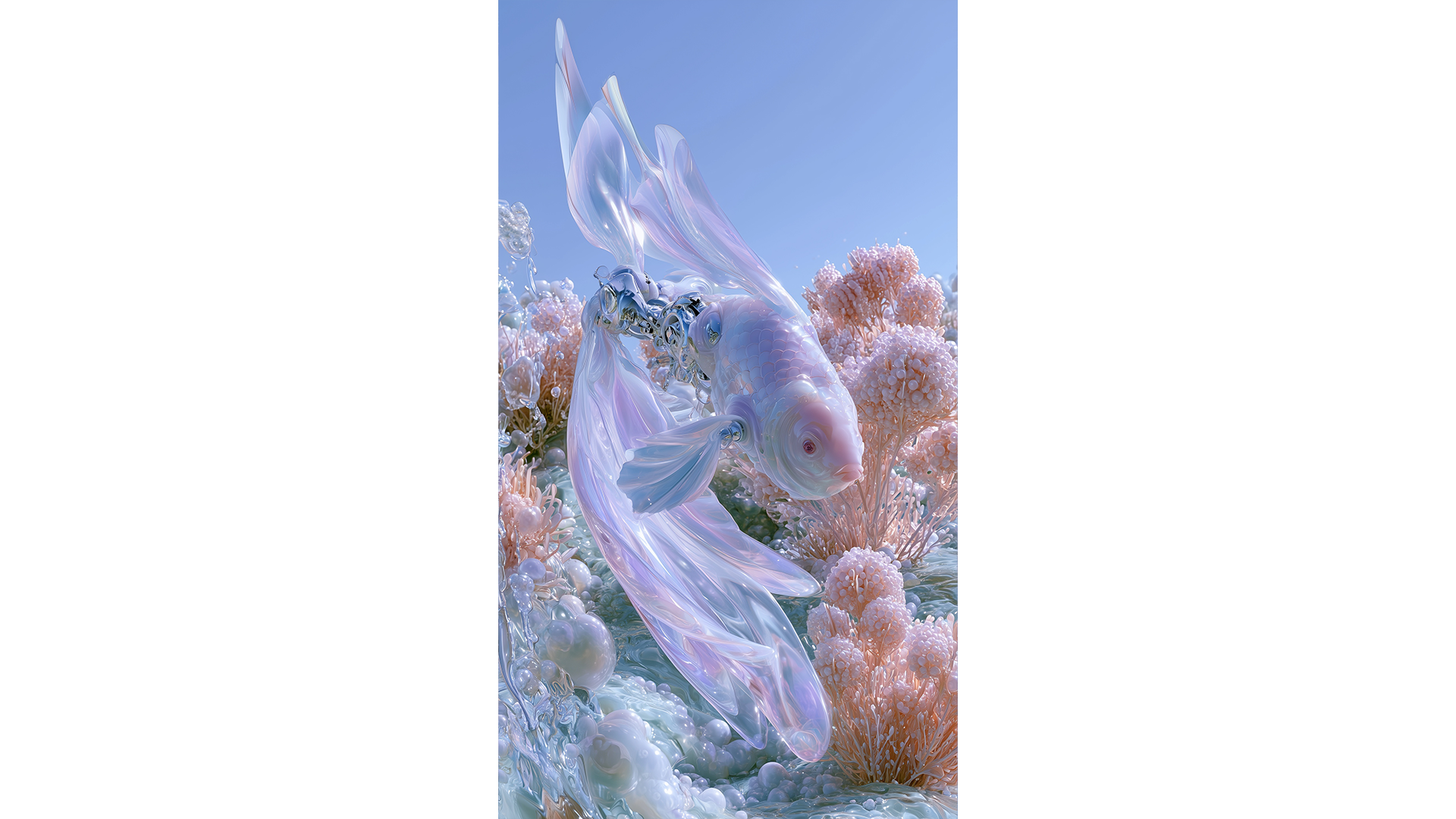
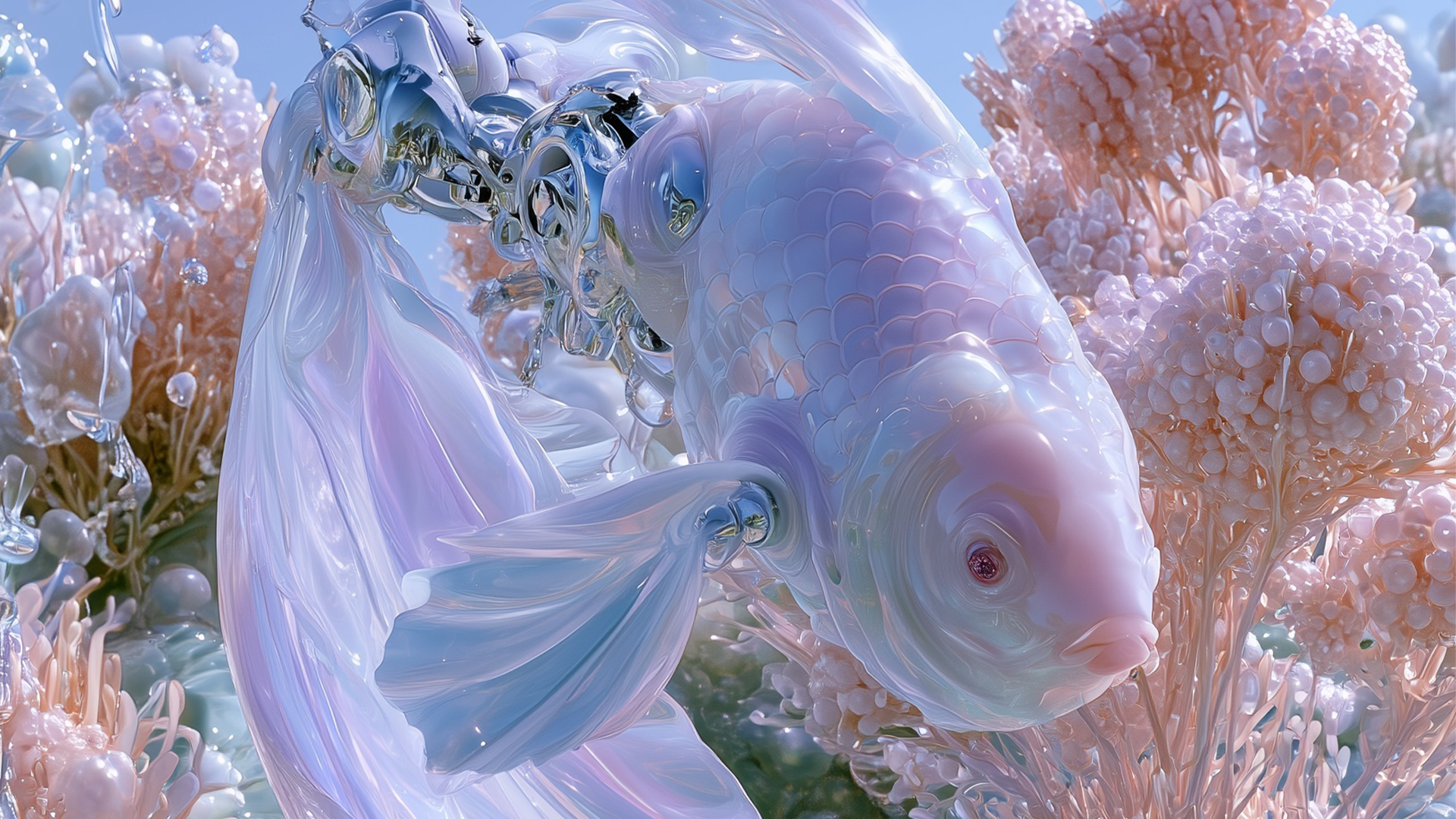
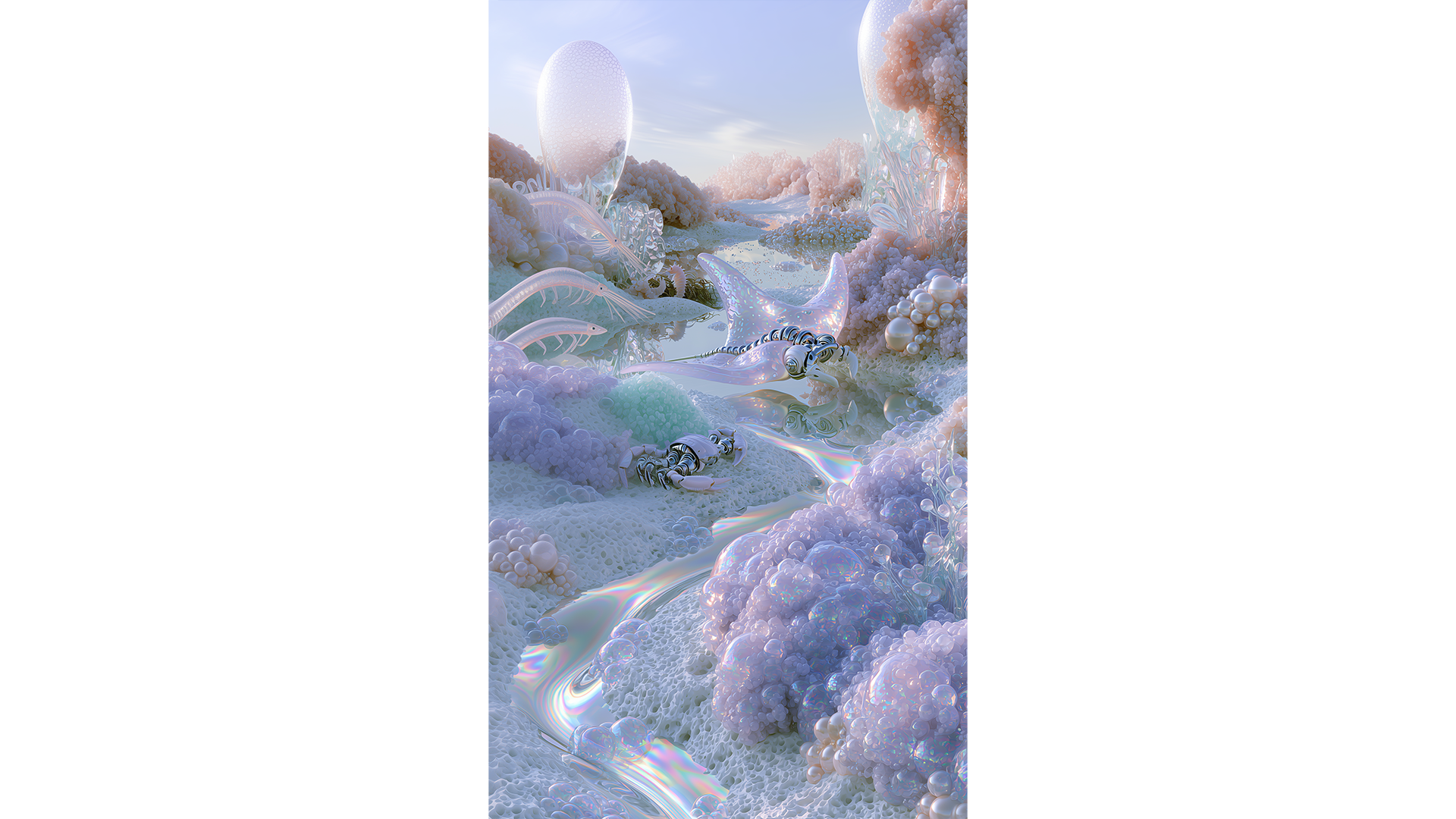
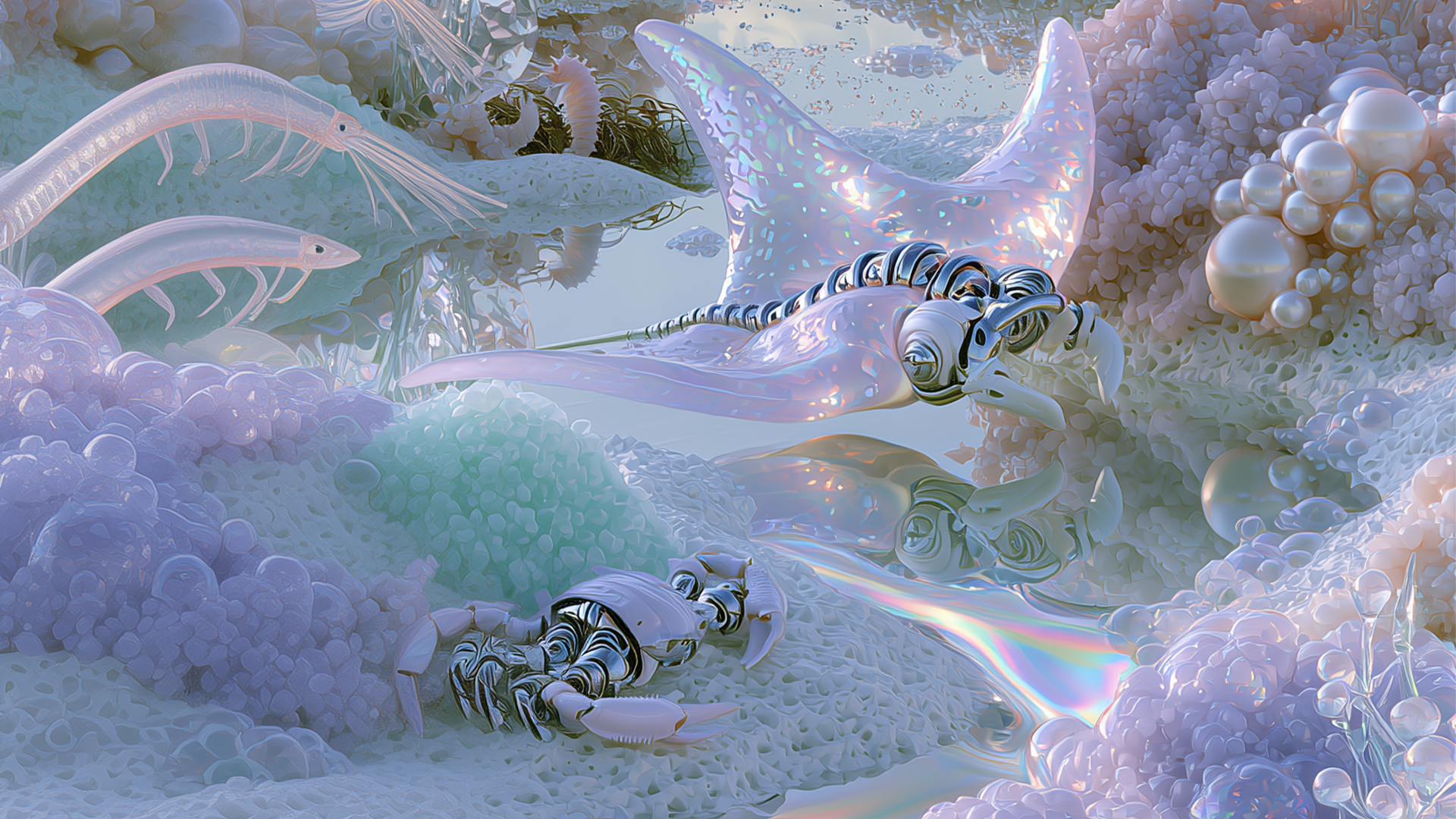
《보이지 않는 바다》는 플라스틱으로 뒤덮인 가상의 미래 바다를 그린
작품이다. 우리가 매일 등지고 살아가느라 좀처럼 깊이 들여다보지
않는, 지구 바다의 먼 미래 모습이기도 하다.
영상은 겨울잠에서 깨어난 플라스틱 하이브리드 해양 생물들이 하나둘
눈을 뜨며 시작된다. 부유하고 헤엄치며 서로 교감하는 존재들의
움직임은, 차갑고 고요한 겨울 풍경을 점차 따뜻한 빛과 색채로
피워낸다. 생명과 희망을 향해 나아가는 이 생동하는 흐름이 작품
전체의 정서를 지탱한다.
언뜻 이들은 화려하고 이국적으로 보이지만, 각각의 형태와 질감에는
플라스틱이라는 인공의 흔적이 고스란히 박혀 있다. 인류의 무분별한
플라스틱 사용과 오염이 끝내 바다를 어떻게 변형시켰는지에 대한
은유다. 매혹적인 아름다움과 서늘한 경고가 한 몸에 깃든 셈이다. 이
풍경은 멀고 추상적인 경고에 그치지 않는다. 해수온이 오르고
생태계가 무너지며, 풍요롭던 행성이 점차 숨 쉴 수 없는 곳으로
변해가는 과정. 즉, 인류가 끝내 지구를 떠나야 했던 근원적 이유가
바로 여기에 있다. 우리가 등지고 떠난 바다는, 우리가 떠날 수밖에
없었던 까닭을 가장 고요하게 증언한다.
그럼에도 영상은 절망으로 침잠하지 않는다. 마지막에 이르러
생명체들은 오염을 딛고 기어이 다시 피어난다. 혹독한 계절 속에서도
끝내 싹트는 희망의 가능성을 건네고자 함이다. 작품이 오염에 대한
즉각적인 해결책을 제시하진 않는다. 다만 지금 눈앞의 현실을 똑바로
마주하게 하는 것, 늘 곁에 있었으나 보지 못했던 바다를 비로소
응시하게 하는 것. 작가는 그 응시의 힘만으로도 충분하다고 믿는다.
제대로 바라보는 일에서 비로소 변화가 시작되기 때문이다.
《보이지 않는 바다》는 우리가 떠나온, 혹은 언젠가 떠나게 될 푸른
행성을 새삼 돌아보게 만든다. 창백한 푸른 점 위의 이 바다가, 영영
사라지기 전에.
Passenger Terminal 2, Duty-Free Area, 3F (LED, 4×7.2m)
《Sea Unseen》 depicts a virtual future ocean covered in plastic.
It isa distant tomorrow for our planet's seas that we rarely peer
into deeply, as we choose to live our daily lives away from it.
The video opens as plastic-hybrid marine organisms awaken from
hibernation, opening their eyes one by one. The movements of these
floating, swimming, and communicating entities gradually transform
a cold, silent winter landscape into blooming warmth, light, and
vibrant color. This lively current, advancing toward life and
hope, sustains the overarching emotion of the work.
Though seemingly gorgeous and exotic, each form and texture is
embedded with artificial traces of plastic. It serves as a
metaphor for how humanity’s reckless plastic usage and pollution
have irreversibly altered the ocean—coexisting as both an
enchanting beauty and a chilling warning. This landscape is not a
distant, abstract warning. It charts the process of a
once-abundant planet becoming uninhabitable due to rising sea
temperatures and collapsing ecosystems. Here lies the root cause
of why humanity had to abandon Earth. The ocean we turned away
from quietly testifies the very reason we were forced to leave.
Yet, the video does not sink into despair. In the end, the
organisms resolutely bloom anew despite the pollution, aiming to
convey the possibility of hope that sprouts even through the
harshest of seasons.
The work offers no instant cure for pollution. It simply forces us
to confront the reality before our eyes, compelling us to gaze at
the ocean that was always beside us but left unseen. The artist
believes in the power of this gaze; looking properly is what
begins the true change.
《Sea Unseen》 prompts us to reflect upon the blue planet we left
behind, or will one day leave, before this ocean atop our pale
blue dot vanishes forever.
보이지 않는 바다 (video version II)
Sea Unseen (video version II)
한윤정
Yoon Chung Han


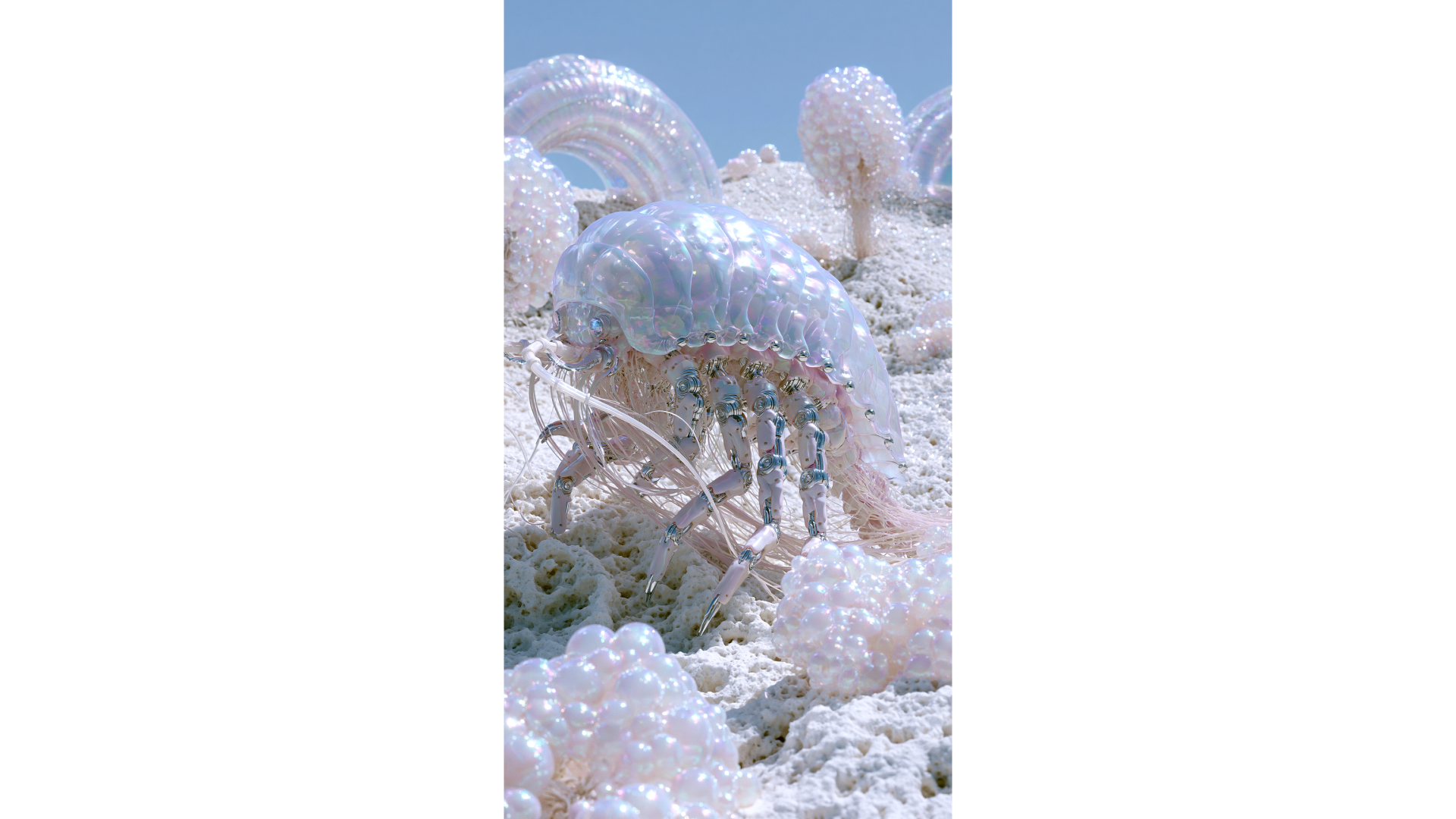
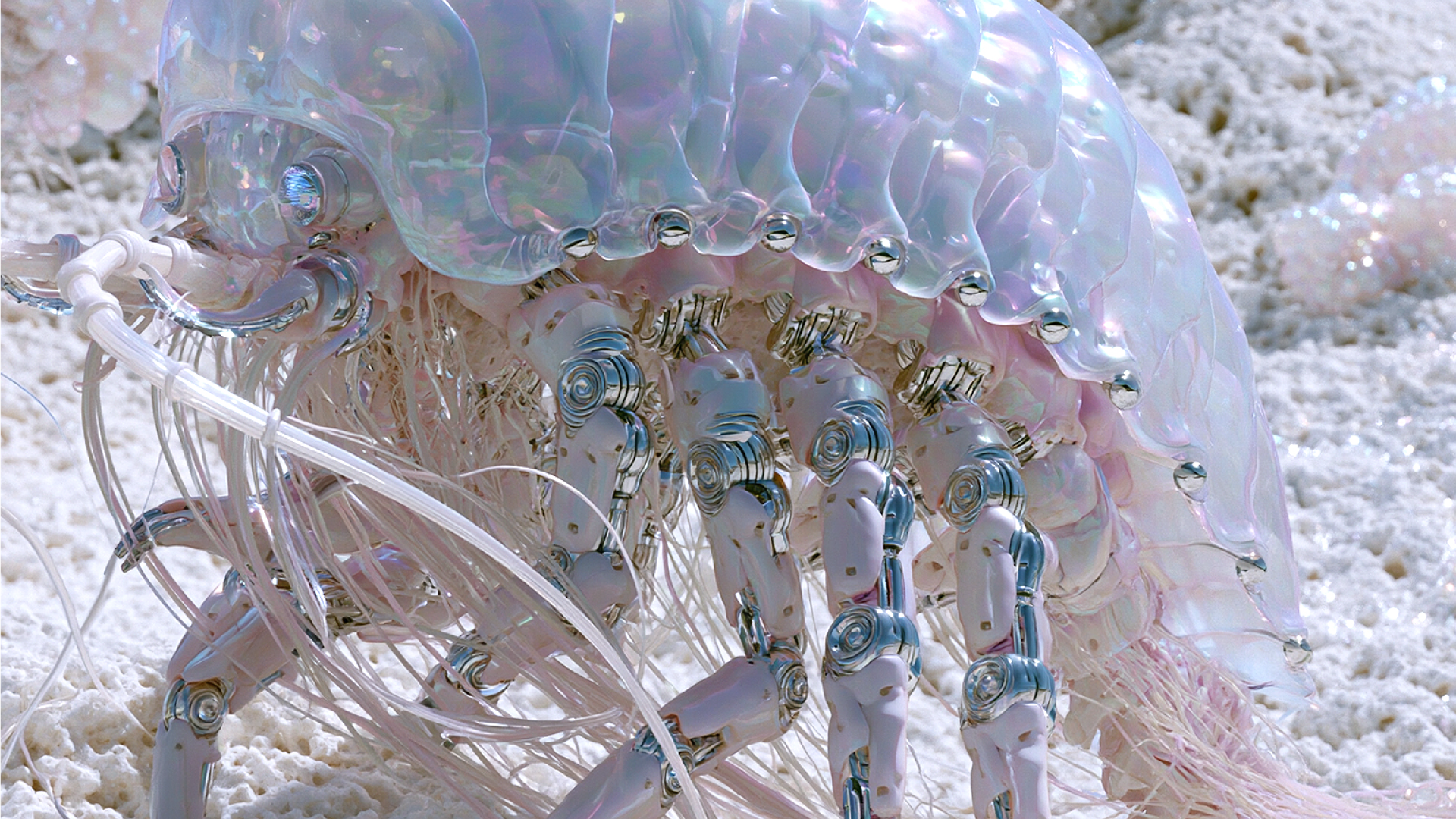
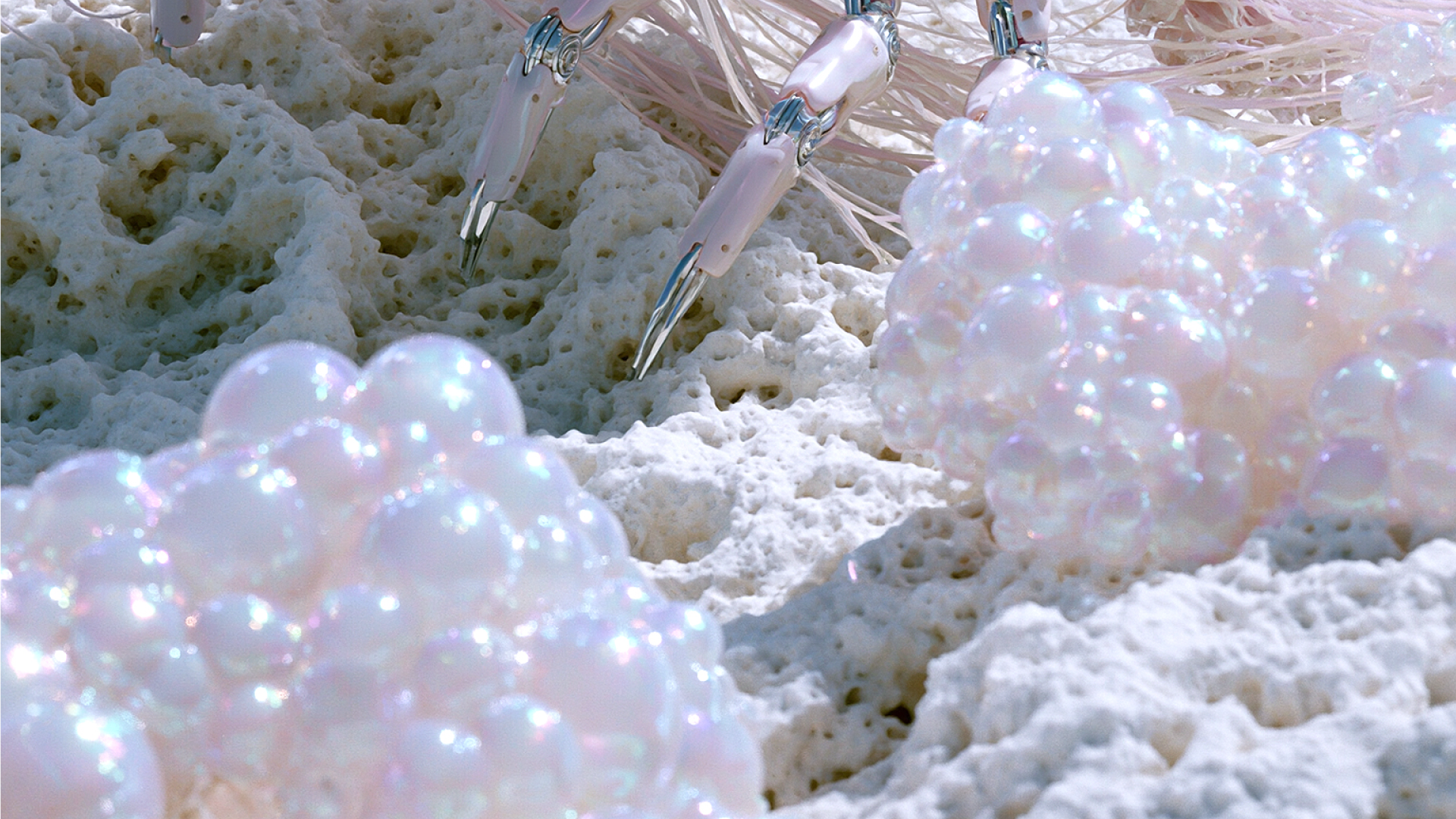
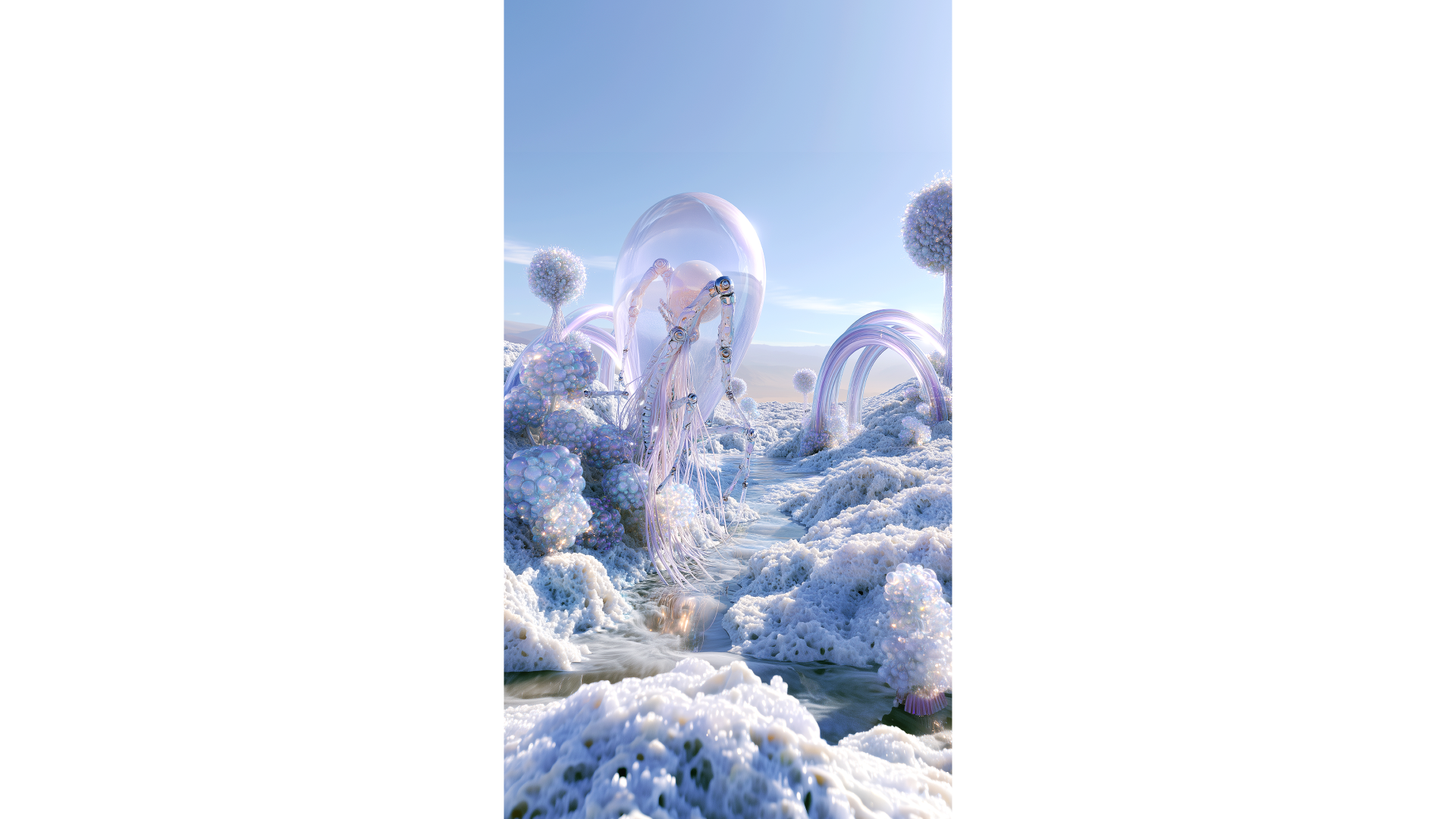
제2여객터미널 3층 면세구역 (LED, 4×7.2m)
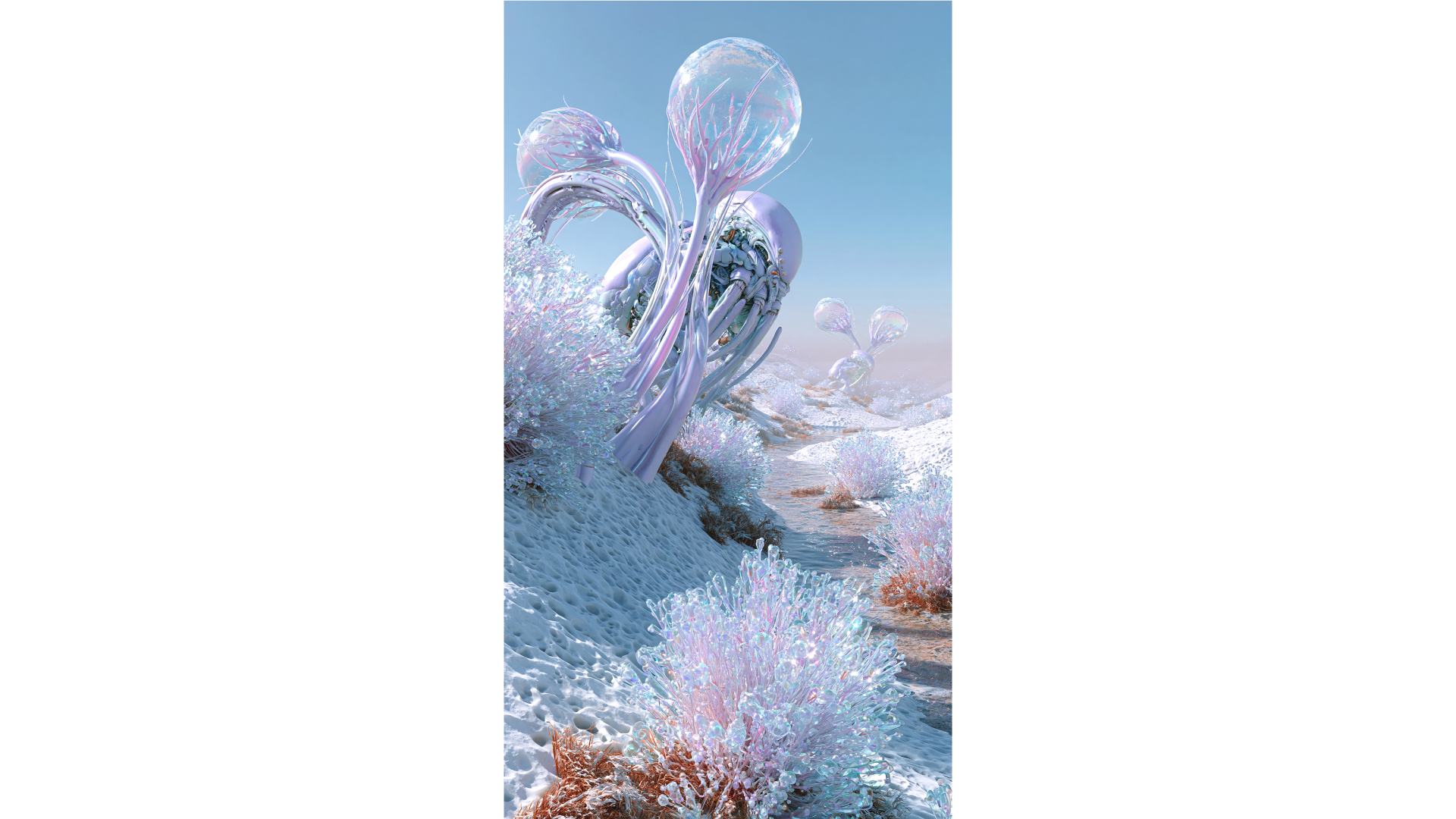
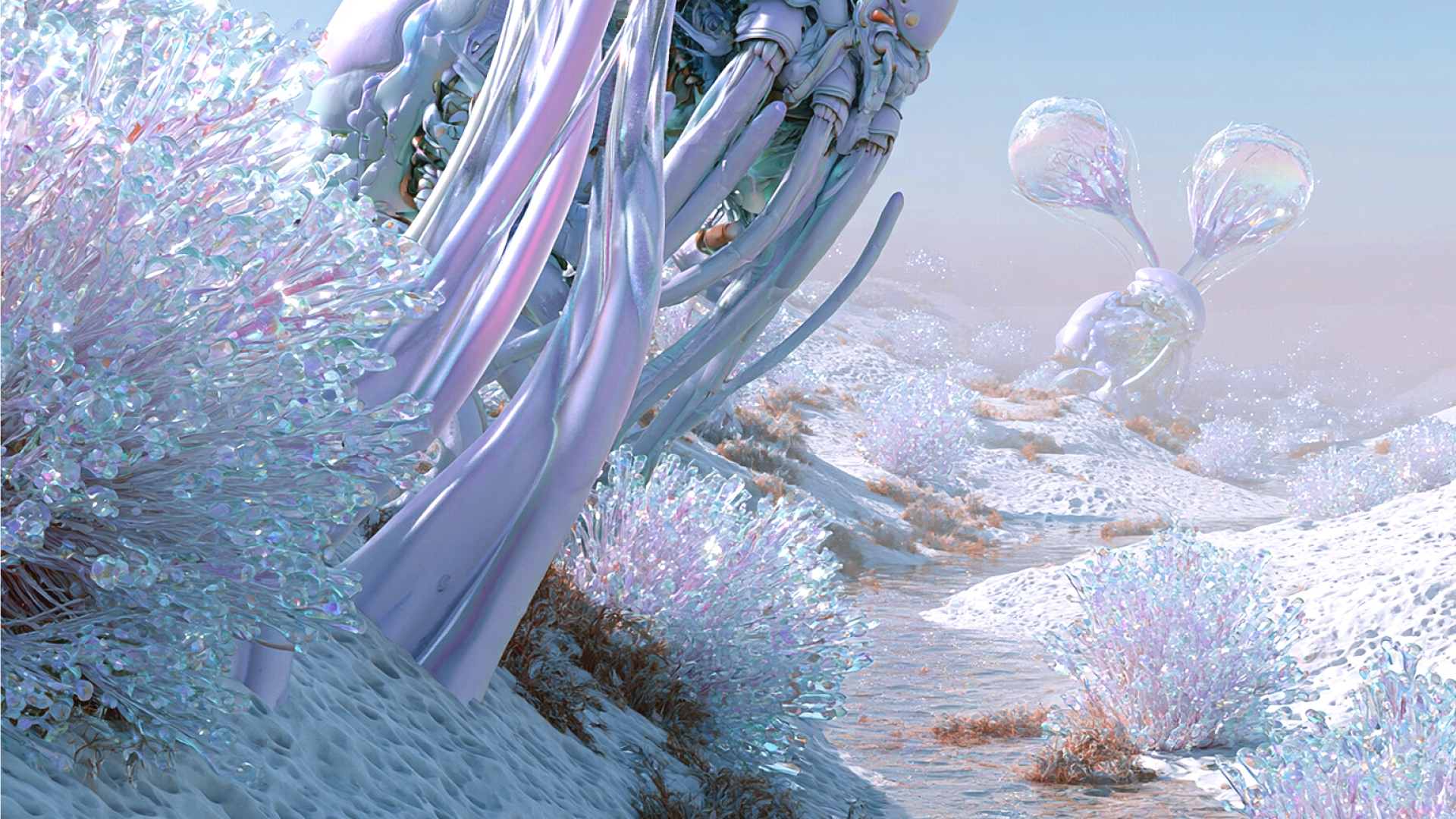
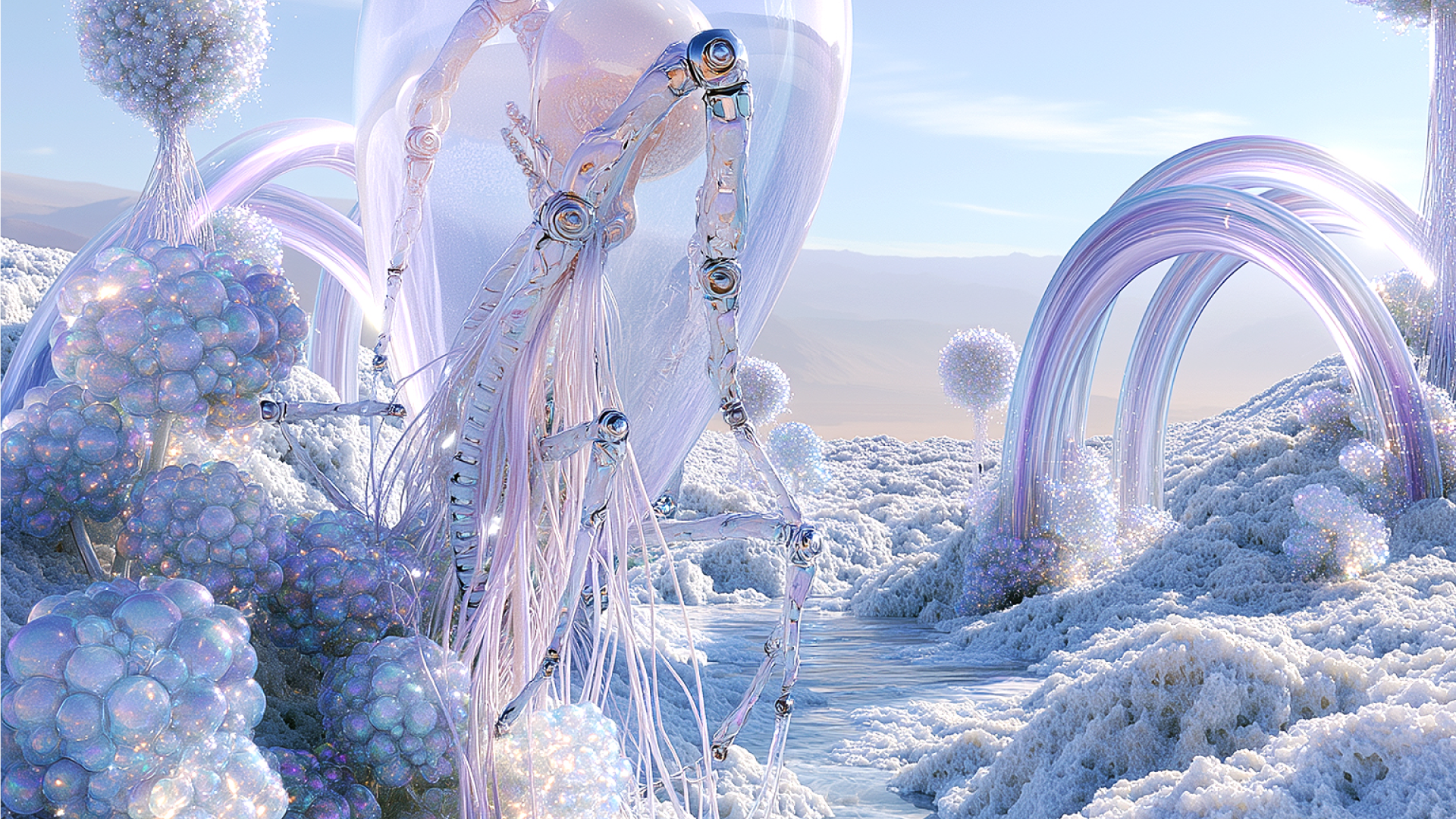
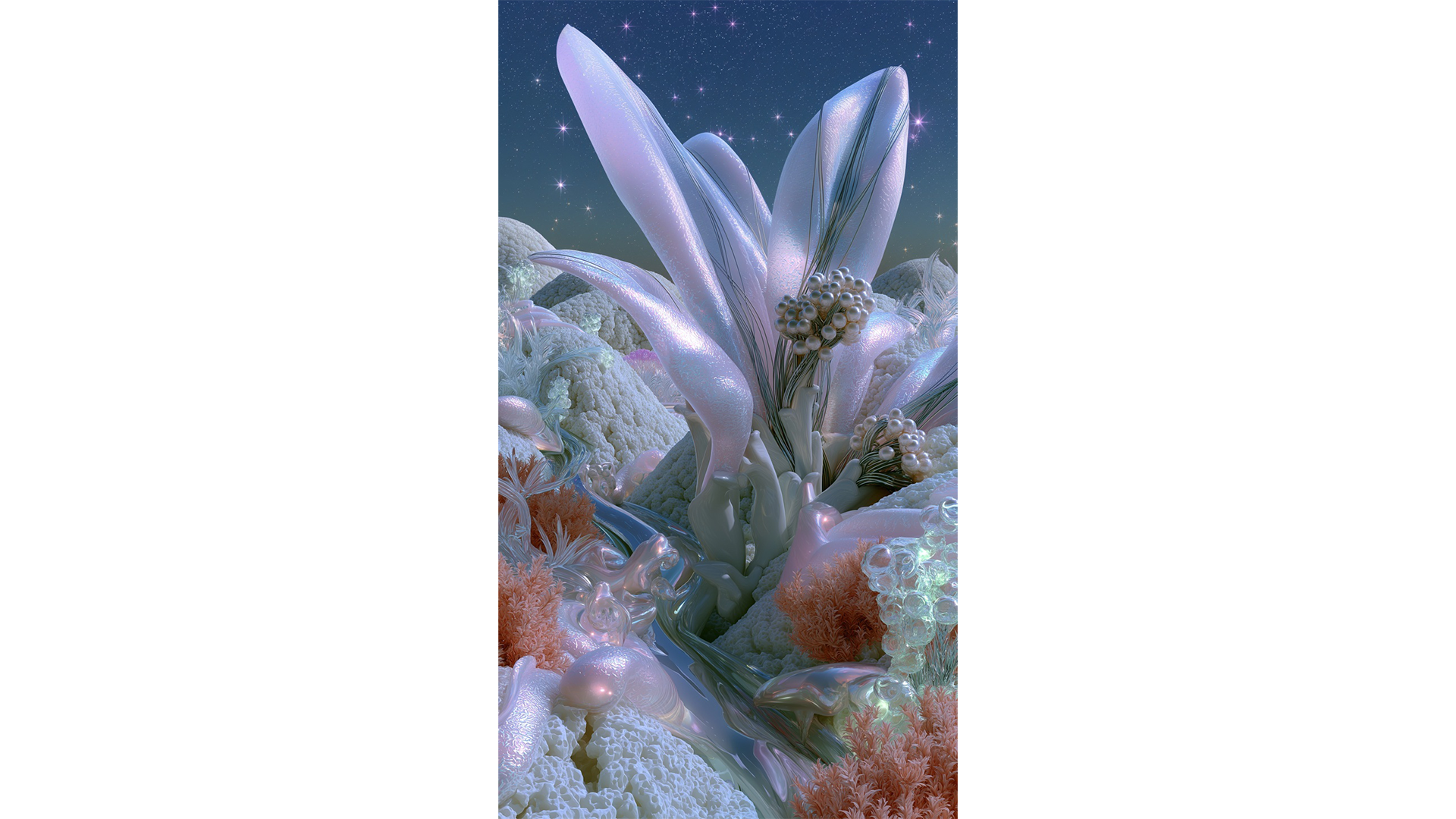
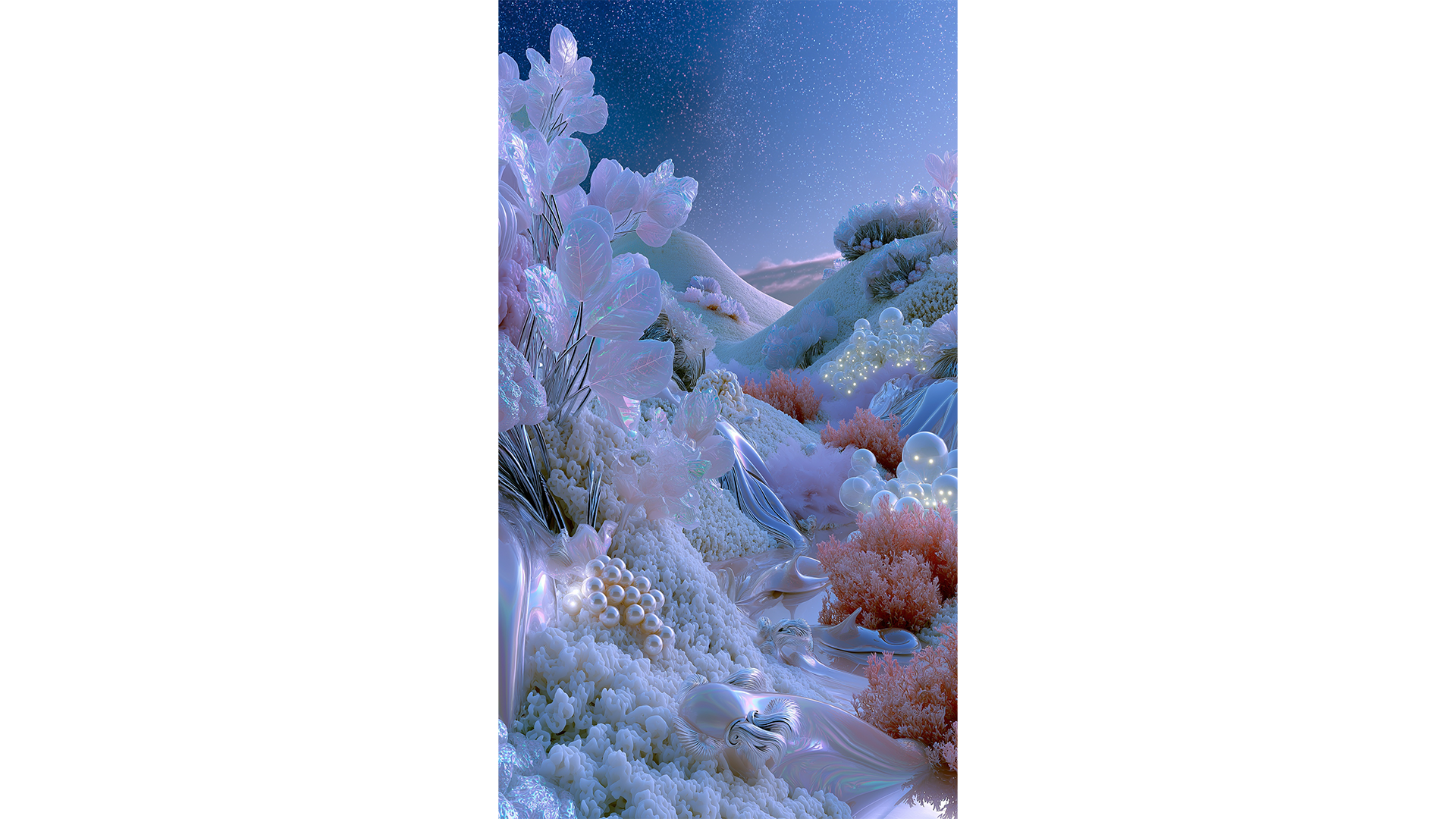
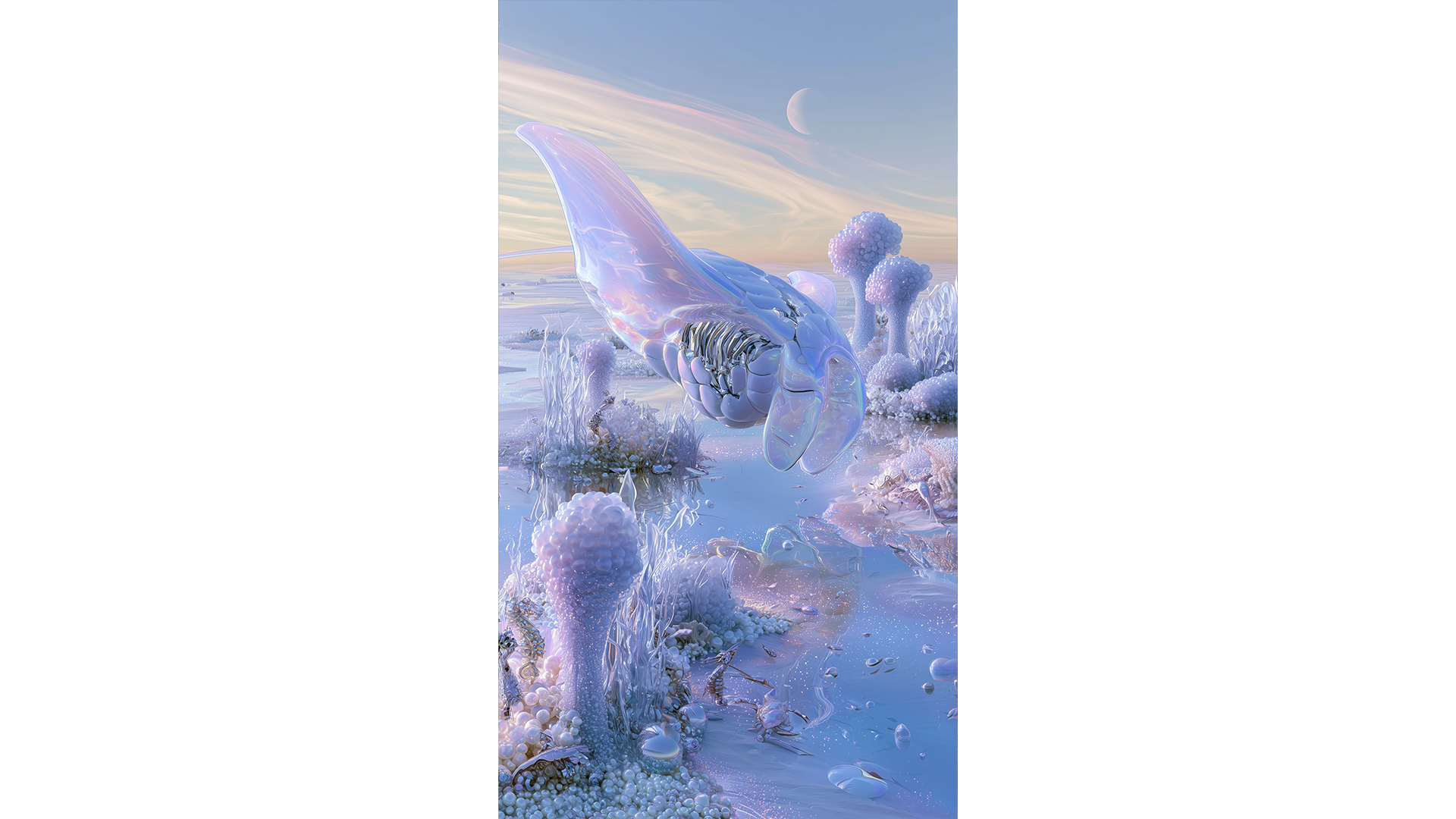
공항을 지나는 관객은 현실의 여행자인 동시에, 지구를 떠나기 직전의
미래 우주 이민자와 겹쳐진다. 특히 면세구역은 아직 지구에 발을 딛고
있지만 이미 떠남이 시작된 경계의 공간이다. 《Dilated Dream》은
바로 이 중간 지대에서, 지구를 떠나는 순간에야 비로소 다시 복기되는
하루 동안의 자연의 감각을 영상으로 펼쳐낸다.
작품은 지구에서 보내는 마지막 하루를 압축한 풍경으로 흐른다.
새벽의 옅은 빛에서 한낮의 충만한 색채로, 다시 해 질 녘의 긴
그림자와 밤의 어둠으로 이어지는 하루라는 가장 익숙한 시간의 단위가
화면 위에서 늘어나고 압축되기를 반복한다. 우주로 향하는 의식
속에서 시간은 더 이상 일정한 속도로 흐르지 않는다. 한순간이
영원처럼 길어지는가 하면, 긴 시간이 한 호흡으로 지나가기도 한다.
제목이 가리키는 '팽창된(dilated)' 시간은 바로 이 감각, 떠나는 자의
의식 안에서 휘어지고 늘어나는 마지막 하루의 리듬을 뜻한다. 화면 속
자연은 현실을 그대로 옮긴 것이 아니라, 먼 시간과 기억을 통과하며
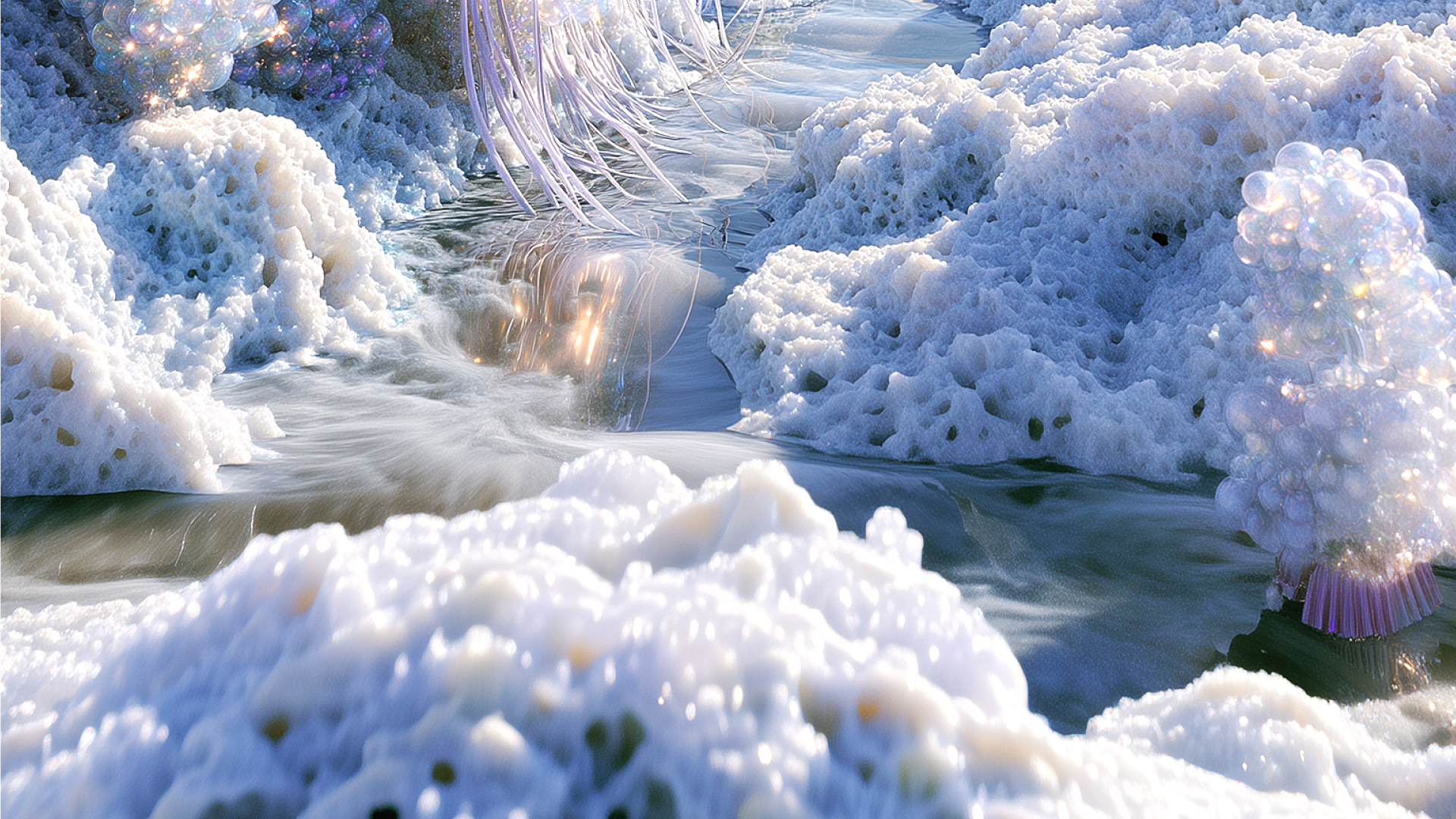
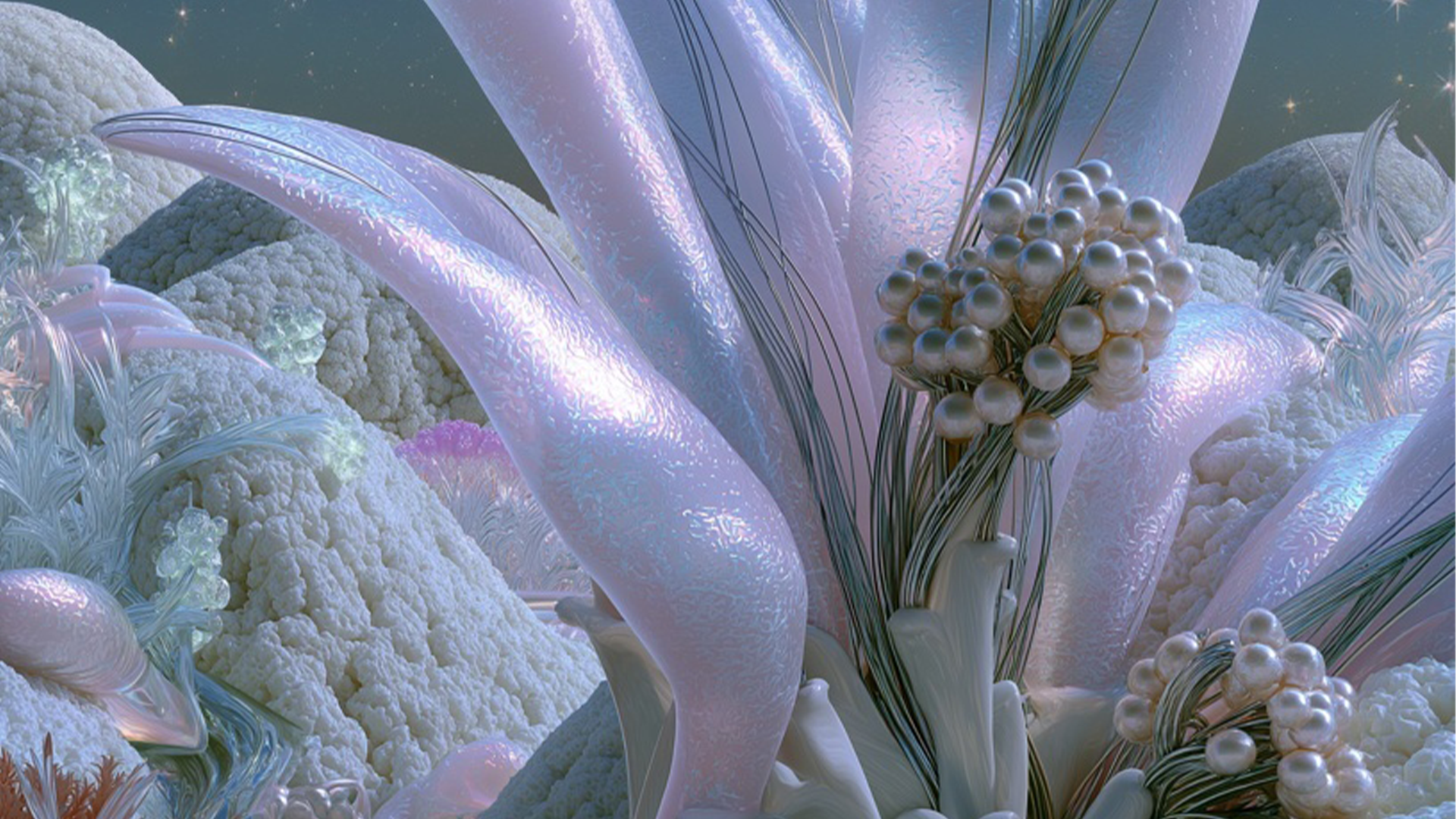
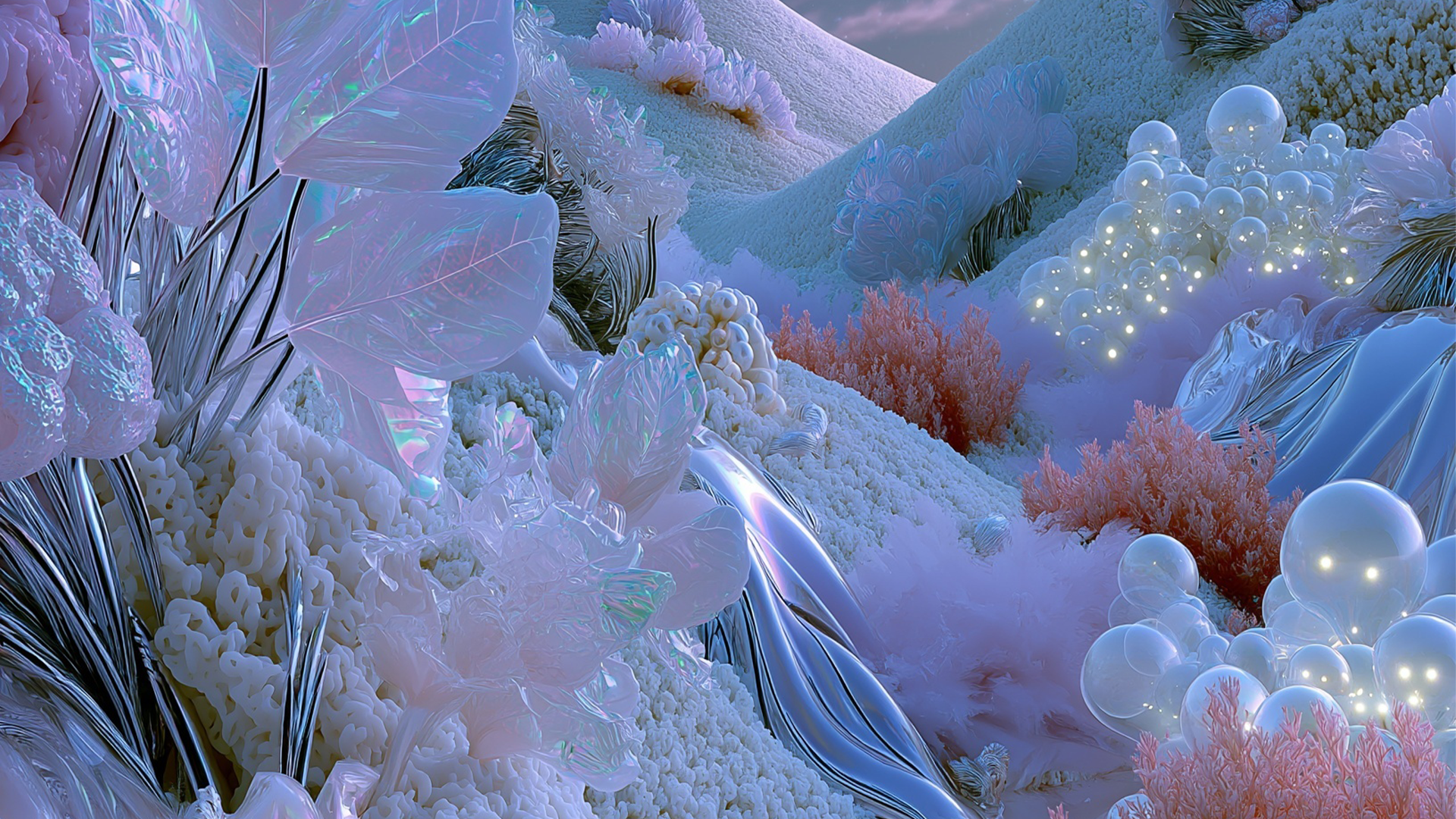
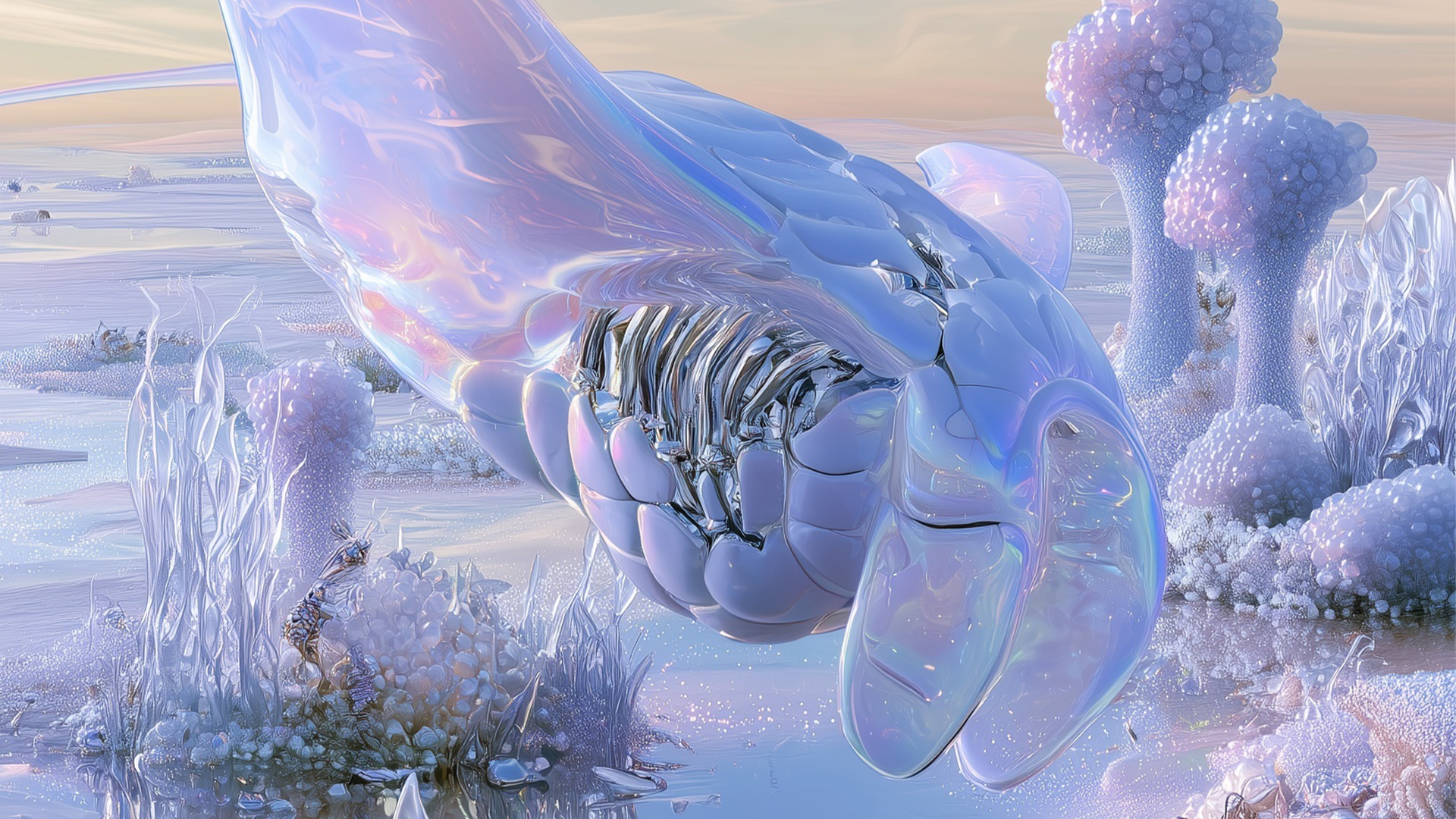
변형된 지구의 표면으로 나타난다. 영상은 하나의 입자에서 출발해
결정화되고, 부유하고, 변형되고, 분해되었다가 다시 형성되는
흐름으로 이어진다. 언뜻 하나의 선으로 이어진 풍경처럼 보이지만,
오래된 기억이 그러하듯 장면과 장면 사이를 불쑥불쑥 건너뛰기도
한다. 빛과 색은 하루의 시간을 따라 천천히 옮겨가고, 그 속에서
지구의 자연은 온전한 형상이 아닌 감각의 조각들로 되살아난다.
이 풍경은 보는 이에 따라 다르게 다가온다. 누군가에게는 오래 전
지구에서 보낸 어느 하루의 잔상처럼, 또 누군가에게는 난생처음
마주하는 어느 행성의 감각처럼 읽힌다. 작품은 지구의 자연을 직접
재현하는 대신, 떠나기 직전의 의식 속에 떠오르는 감각의 잔상으로
이를 제시한다. 늘 곁에 있어 익숙함에 묻혀 있던 하루의 빛과 공기와
풍경은, 역설적이게도 멀어지는 순간에야 비로소 낯선 밀도와 선명함을
획득한다.
Passenger Terminal 2, Duty-Free Area, 3F (LED, 4×7.2m)
Audiences traversing the airport act as real-world travelers
overlapping with future cosmic emigrants poised to depart Earth.
The duty-free zone, specifically, is a liminal space where
departure has already begun while feet are still grounded. Within
this intermediate zone, 《Dilated Dream》unfolds visual sensory
recollections of Earth's nature throughout a single day—replayed
only at the final moment of departure.
The video flows as a compressed landscape of one's final day on
Earth. The most familiar temporal unit—transitioning from dawn's
pale light to midday's full colors, dusk's long shadows, and
nocturnal darkness—repeatedly expands and compresses on screen.
Within an outbound consciousness, time moves non-uniformly; a
fraction of a second stretches like eternity, while hours pass in
a single breath. The titular 'dilated' time signifies this fluid
rhythm of a final day warping within a departing mind.
Nature on screen is not a figurative replica, but Earth's surface
transformed through distant time and memory. The visual journey
flows from a single particle that crystallizes, floats, mutates,
dissolves, and reconfigures. Though appearing as a continuous
landscape, it abruptly leaps between scenes like faded memories.
Light and color shift along the day's timeline, reviving Earth's
nature not in full forms, but as fragments of sensation.
This landscape resonates differently with each viewer: to some, a
lingering afterimage of a distant day spent on Earth; to others,
the sensation of an alien planet encountered for the first time.
Instead of direct reproduction, the work presents nature as
sensory afterimages surfacing right before departure.
Paradoxically, the daily light, air, and landscape—once buried in
familiarity—gain an unfamiliar density and vividness only as they
recede.
확장된 꿈
Dilated Dream
신효흔
Hyoheun Shin
제2여객터미널 면세구역 3층 232게이트 앞
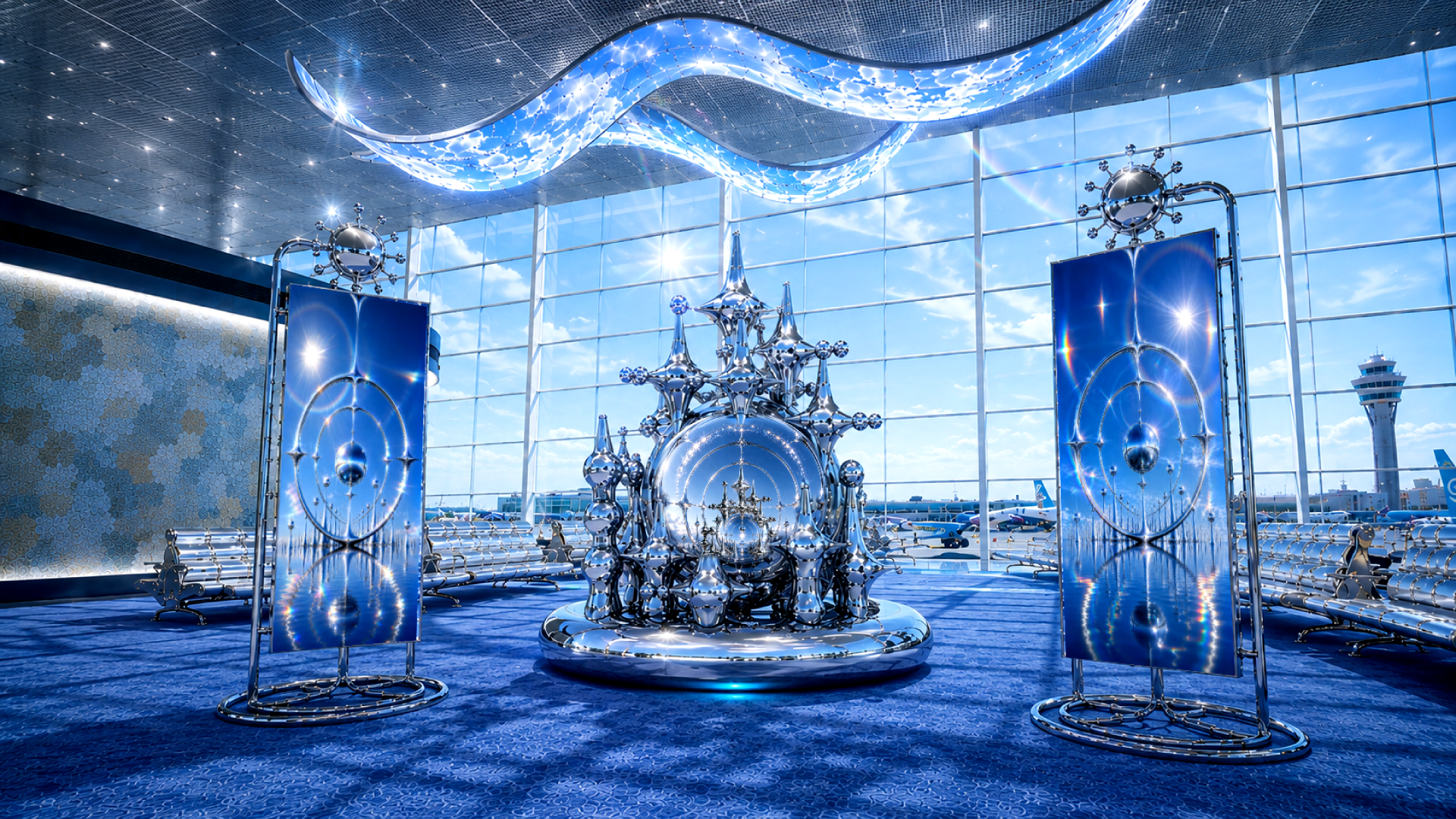
《테이크어웨이: 사랑, 평화, 환대》는 인류가 2247년에 이르러 다른
행성으로 이주하게 될 때, 우리가 잊지 않고 가져가야 할 감각이
무엇인지 질문한다. 여기서 ‘테이크어웨이’는 단순히 이동 중 챙겨가는
물건이나 생존을 위한 자원이 아니라, 낯선 세계에 도착한 이후에도
끝내 잃지 않아야 할 태도와 감각을 의미한다. 작품은 사랑, 평화,
환대라는 세 가지 감각을 미래의 이주 과정 속에서 다시 사유하며,
공항이라는 현실의 이동 공간을 다른 행성으로 향하는 임시적
우주항처럼 상상한다. 공항은 출발과 도착, 대기와 통과, 만남과
이별이 반복되는 장소이자, 서로 다른 존재들이 잠시 같은 시간과
공간을 공유하는 장소다. 작품은 이러한 공항의 성격을 바탕으로,
이동의 기술보다 먼저 질문되어야 할 윤리와 감각의 문제를 조형적으로
제안한다.
작품은 이 질문을 설치와 영상이 서로 반사되고 연결되는 구조로
풀어낸다. 천장의 미디어클라우드 영상은 공항 상공에 흐르는 또
하나의 우주 하늘을 만들며, 관객이 머무는 장소 위에 유동적인 항로와
빛의 흐름을 펼쳐낸다. 양옆의 렌티큘러 패널은 여객의 움직임에 따라
이미지를 변화시키며, 고정된 화면이 아니라 이동하는 몸과 시선에
반응하는 시각 장치로 작동한다. 패널 위에 놓인 원형 미러는 상공의
미디어클라우드 영상을 붙잡아 여객의 눈높이로 되비추며, 관객의
시선을 자연스럽게 지상에서 하늘로, 다시 조각과 영상 사이로
이동시킨다. 한편 중앙의 공기조형물은 이 모든 빛과 시선을 품은 채
반짝임의 중심이 된다. 그 표면의 스파크와 반짝이는 형상들은 도착의
신호, 축복의 순간, 혹은 낯선 세계에 착륙한 존재가 발산하는 감정의
파동처럼 읽힌다.
여기서 사랑, 평화, 환대는 추상적인 구호가 아니라 낯선 세계에
도착하기 위한 윤리적 좌표이자, 서로 다른 존재들이 같은 공간을
통과하기 위해 필요한 감각의 항법으로서 제시된다. 다른 행성으로의
이주는 과학기술의 문제이기 이전에, 우리가 어떤 존재로 도착할
것인가에 대한 질문이기도 하다. 작품은 미래의 이동을 상상하면서도,
그 미래가 현재의 공항에서 이미 시작되고 있음을 드러낸다. 매일
수많은 사람들이 통과하는 이 장소에서, 우리는 서로를 스쳐 지나가고,
기다리고, 맞이하고, 떠나보낸다. 《테이크어웨이: 사랑, 평화,
환대》는 바로 그 순간들 속에서 우리가 끝내 가져가야 할 것이
무엇인지 묻고, 그 감각들을 빛과 반사, 움직임과 조각의 언어로 다시
발신한다.
Passenger Terminal 2, Duty-Free Area, 3F, Near Gate 232
《Takeaway: Love, Peace, Hospitality》asks what core sensations
humanity must remember when migrating to other planets by the year
2247. Here, "takeaway" means not mere survival resources or travel
baggage, but the essential attitudes and perceptions we must
preserve upon arriving in an alien world. Reimagining love, peace,
and hospitality within future migration, the work transforms the
airport into a temporary spaceport bound for the cosmos. The
airport—a site of repeated departures, arrivals, waiting, and
parting—serves as a backdrop where diverse entities momentarily
share time and space. Utilizing these spatial traits, the artwork
sculpturally proposes questions of ethics and sensation that must
precede the mere technologies of relocation.
The work resolves this inquiry through a structure where
installation and video interconnectedly reflect each other. The
ceiling’s Media Cloud video crafts an alternate cosmic sky above
the airport, unfolding fluid flight paths and light over the
viewers. Flanking lenticular panels alter their images according
to the passengers' movements, acting as visual devices responsive
to moving bodies and gazes rather than remaining static. Circular
mirrors on the panels capture and reflect the overhead Media Cloud
video at passenger eye-level, naturally guiding the viewer’s gaze
from ground to sky, and between sculpture and video. Meanwhile,
the central inflatable sculpture anchors this interplay of light
and sight; its sparking, shimmering surface reads as signals of
arrival, moments of blessing, or emotional waves emitted by a
being landing in an unfamiliar world.
Here, love, peace, and hospitality are presented not as abstract
slogans, but as ethical coordinates for arriving in new worlds and
sensory navigation for diverse beings traversing shared spaces.
Interplanetary migration is less a feat of technology than a
question of what form we will take upon arrival. While imagining
future transit, the work reveals that this future already begins
within the contemporary airport. In this space passed by thousands
daily, we brush past, wait, welcome, and send off one another.
Takeaway: Love, Peace, Hospitality questions what we must
ultimately carry through those exact moments, re-broadcasting
those sensations through the vocabulary of light, reflection,
movement, and sculpture.
Terminal 2, Duty-Free, 3F
테이크어웨이: 사랑, 평화, 환대
Takeaway: Love, Peace, Hospitality
염인화
Inhwa Yeom
제2여객터미널 면세구역 3층 서편 노드광장
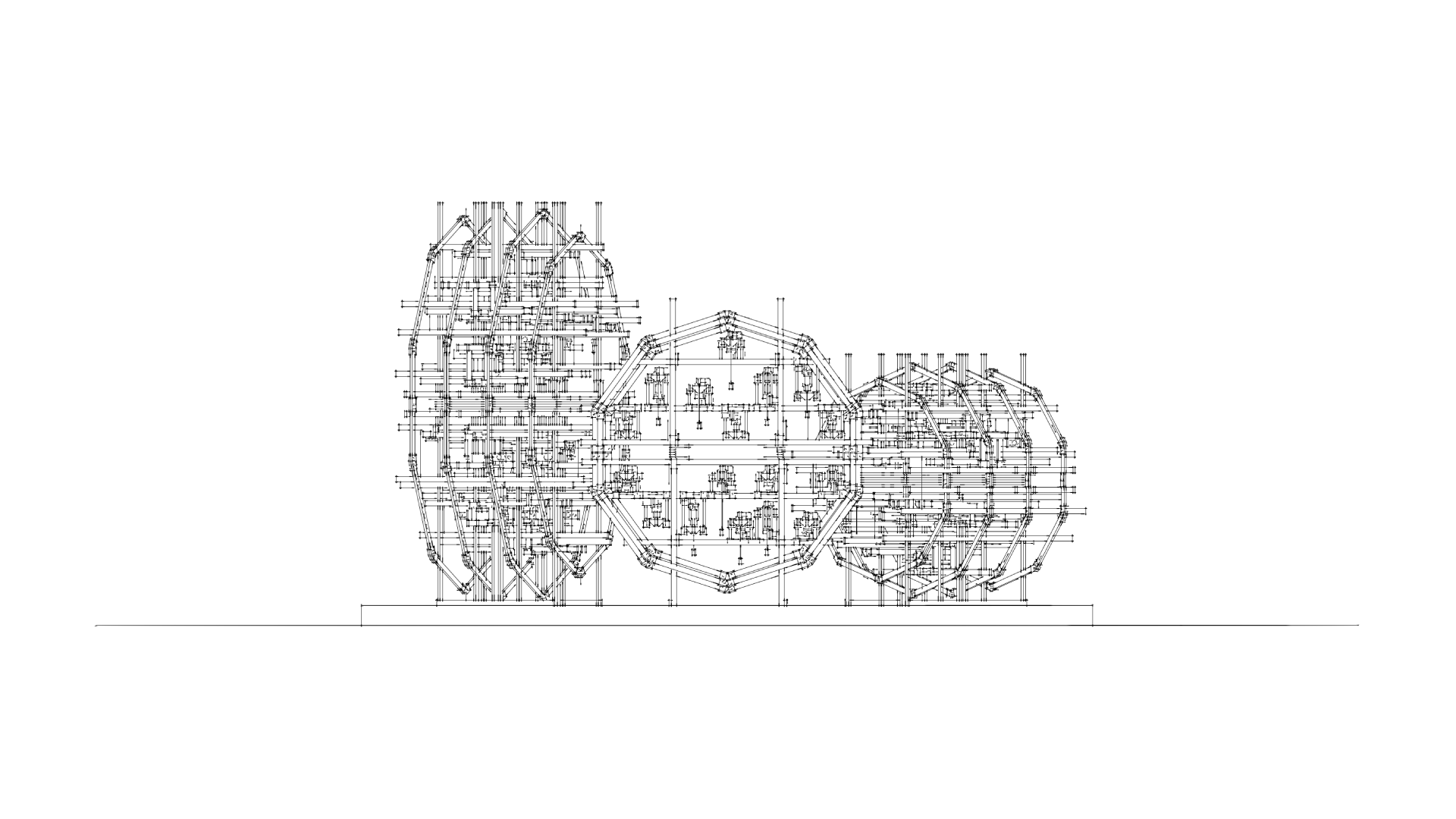
인천공항 제2여객터미널 노드광장의 거대한 돔 아래, 원형 좌대 위로
하나의 천체처럼 보이는 구조물이 떠 있다. 목재로 이루어진 세 개의
둥근 형상은 특정한 대상을 직접 재현하지 않으면서도 다양한 이미지를
환기한다. 행성처럼 보이기도 하고, 천문 관측 장치나 우주선의
골격처럼 느껴지기도 하며, 어딘가 미완성된 공동체의 구조 같기도
하다. 양정욱은 이 모호한 형상을 통해 미래를 하나의 명확한 목적지가
아니라, 함께 형성해가는 관계의 상태로 제안한다.
작품은 느리게 움직인다. 처음에는 움직임조차 감지되지 않을 만큼
미세한 움직임이다. 그러나 바로 그 느림이 작품의 핵심이다. 작가는
빠르게 이동하고 끊임없이 통과하는 공항 한가운데에 인간의 속도와는
다른 '천체의 시간'을 끌어들인다. 작품의 회전은 노드광장 돔 천장의
거대한 격자 구조와 은은하게 호응하며, 관람자로 하여금 지금 자신이
선 자리를 단순한 환승 공간이 아닌 하나의 우주적 풍경으로 인식하게
만든다.
작품은 세 가지 재료로 직조된다. 목재는 자연과 생명을, 모터는
기계와 문명을, 실은 연결과 관계를 상징한다. 서로 다른 이 요소들은
독립적으로 존재하지 않고, 함께 작동할 때에만 비로소 미세한
움직임과 종소리를 만들어낸다. 작품은 결국 서로 다른 존재들이
연결될 때 하나의 세계가 비로소 움직이기 시작한다는 사실을
시각화하는 공동체의 메타포가 된다. 양정욱이 말하는 미래 또한 이와
닮아 있다. 미래는 모두에게 같은 속도로 도착하지
않는다. 누군가에게는 이미 지나간 시간이고, 다른 누군가에게는 아직
오지 않은 시간이다. 그럼에도 사람들은 저마다의 속도로 비슷한
방향을 향해 나아간다. 작가는 그 방향이 특정한 장소나 목적지가
아니라, 서로를 바라보는 감각 속에 있다고 말한다. 미래란 멀리
떠나는 일이 아니라, 유한한 존재인 우리가 서로를 다시 바라보게 되는
과정이라는 것이다.
미래라는 것은 사람마다 다르게 다가온다
누구에게는 미래는 벌써 지나갔고
누군가에게는 다가오고 있다
다만 비슷한 방향으로 나아갈 뿐이다
미래는 좋아하는 방향이다
미래는 우리의 유한한 몸이 경험하는 짧은 방향이다
미래는 어딘가로 멀리 가는 것이 아니다
유한한 우리의 모습을 돌아보는 것이며
유한한 우리를 서로 바라보게 하는 것이다
우리는 저절로 미래가 된다 그럴 때마다 조금씩 더 가까워진다
글. 양정욱
Passenger Terminal 2, Duty-Free Area, 3F, West Node Plaza
Beneath the massive dome of Incheon Airport’s T2 Node Plaza, an
atmospheric structure floats over a circular pedestal like a
celestial body. Three wooden spheres evoke diverse imagery without
imitating specific objects—resembling planets, astronomical
devices, spacecraft skeletons, or the framework of an unfinished
community. Through this ambiguous form, Jung Uk Yang presents the
future not as a definitive destination, but as an evolving state
of relationships.
The sculpture moves slowly, with a subtlety initially
imperceptible. Yet, this slowness is the core. Amidst a fast-paced
airport of constant transit, the artist introduces "celestial
time," distinct from human speed. The sculpture's rotation subtly
resonates with the dome's grand grid ceiling, inviting travelers
to perceive their current space as a cosmic landscape rather than
a mere transit zone.
Woven from three materials, wood symbolizes nature and life, the
motor represents machinery and civilization, and thread signifies
connection and relationship. Operating collectively rather than
independently, these distinct elements generate minute movements
and chimes. The work functions as a communal metaphor, visualizing
how a world begins to move only when diverse entities connect.
Yang’s vision of the future mirrors this mechanism. Future does
not arrive at a uniform speed; for some, it is already past, while
for others, it has yet to come. Nonetheless, people advance toward
a similar direction at their own pace. The artist suggests this
direction lies not in a specific destination, but within the sense
of looking at one another. The future is less about traveling afar
and more about finite beings facing each other again.
The surrounding scenery integrates into the structure. Travelers
naturally gather and sit around the perimeter—unacquainted
individuals departing, arriving, or waiting for layovers,
collectively viewing the same object. This loose community formed
within an anonymous space feels like a final glimpse of an era
when humanity coexisted on a single planet.
《A Little Closer Each Time》is not a narrative of humans rushing
toward tomorrow, but a study of diverse entities gradually
converging in a shared direction. Within this slow movement, we
rediscover that the future is ultimately forged through the ways
we look at one another.
The future approaches each person differently.
To some, it has already passed;
To others, it is arriving.
We merely advance toward a similar direction.
The future is a preferred direction.
The future is a brief direction experienced by our finite
bodies.
The future is not about going somewhere far.
It is looking back at our finite selves,
And making our finite selves look at one another.
We naturally become the future; each time,
We get a little closer.
by Jung Uk Yang
그럴 때마다 조금씩 더 가까워진다
A Little Closer Each Time
양정욱
Jung Uk Yang